The Real Cost of VRF Compressor Replacement in NYC
May 12, 2026
Your VRF System Isn’t Heating: Here’s What to Check
May 15, 2026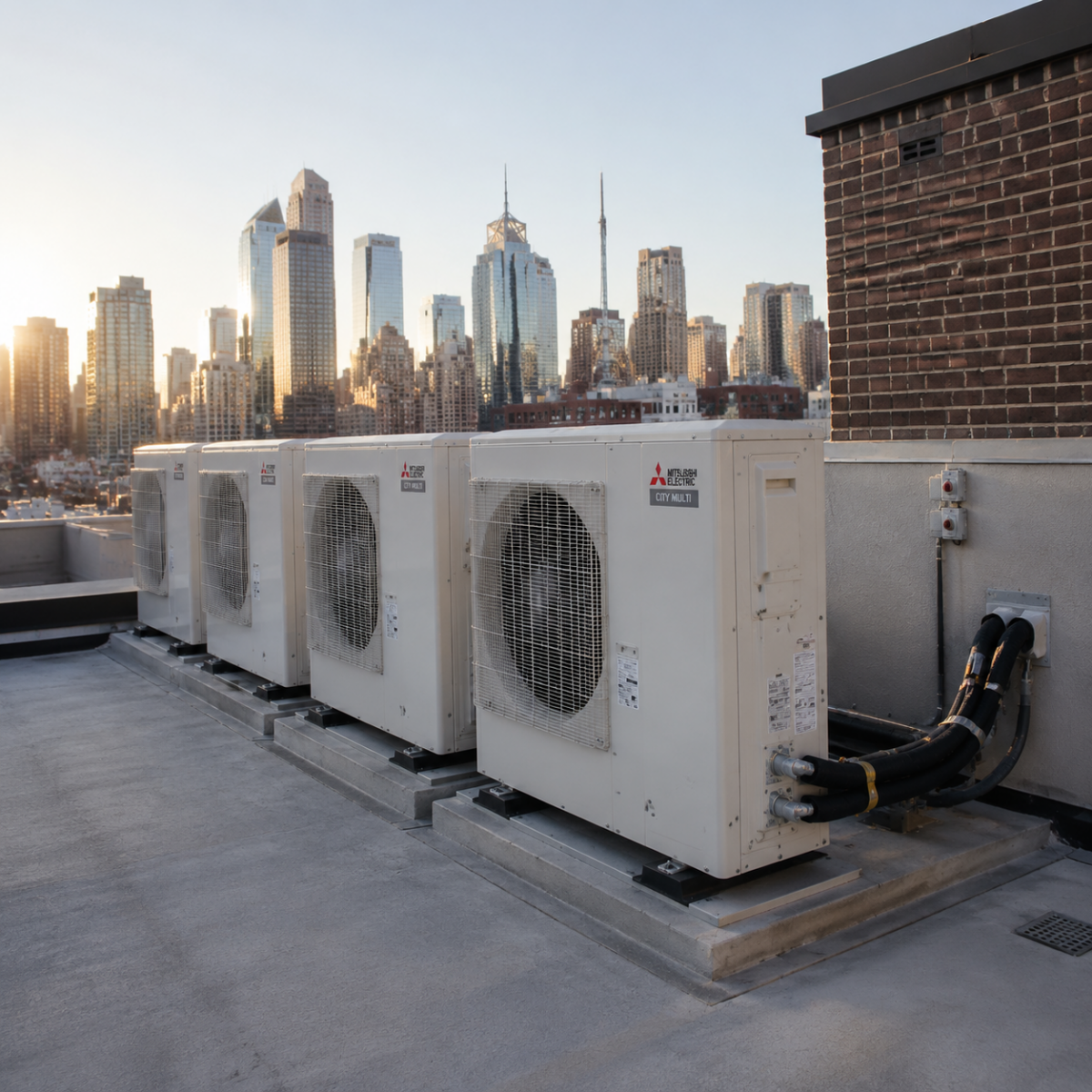
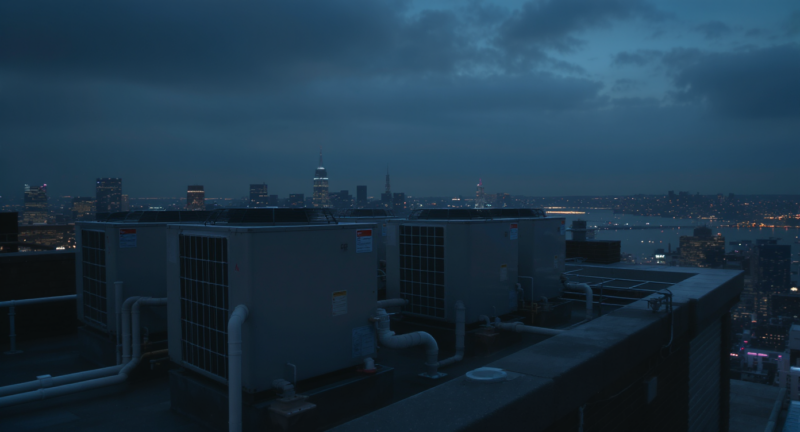
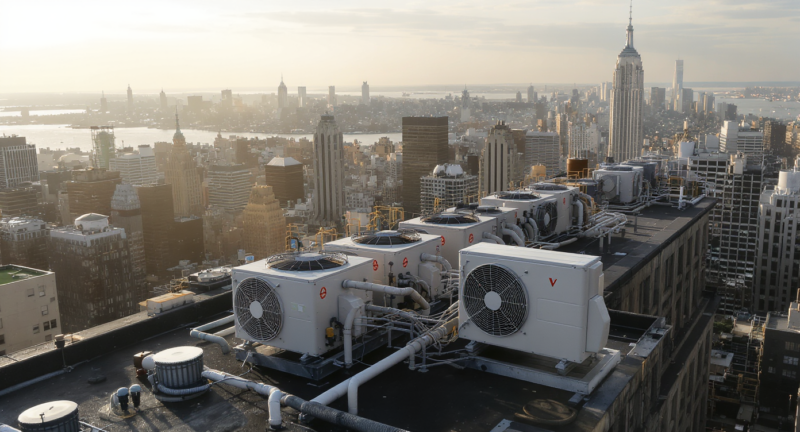
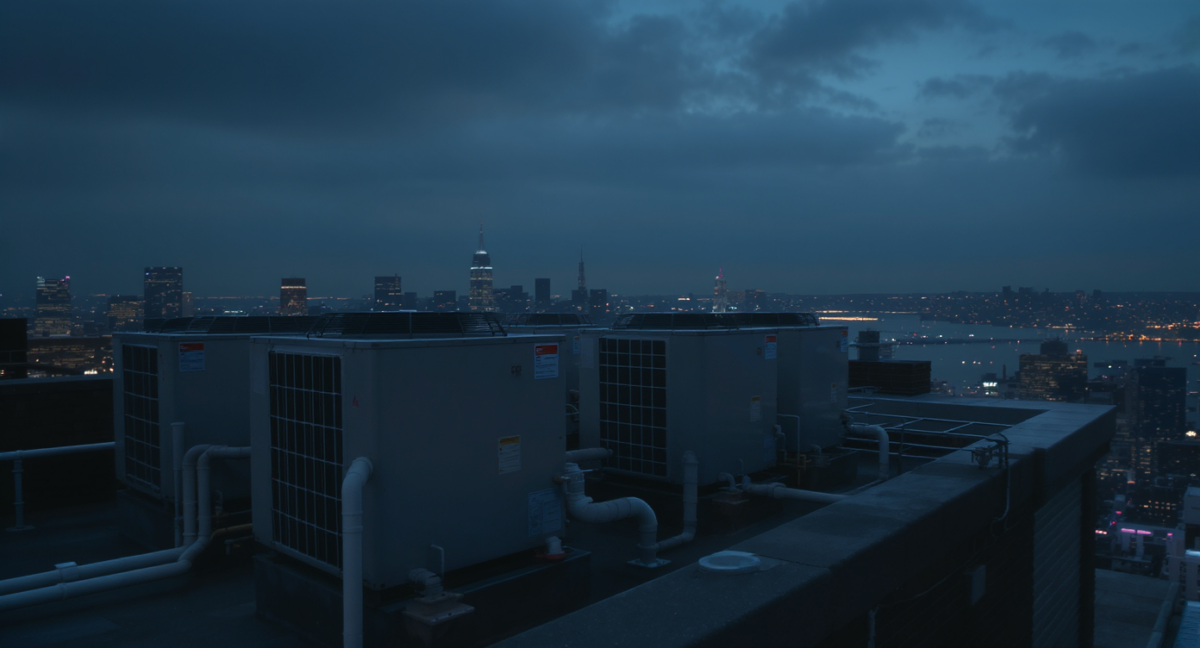
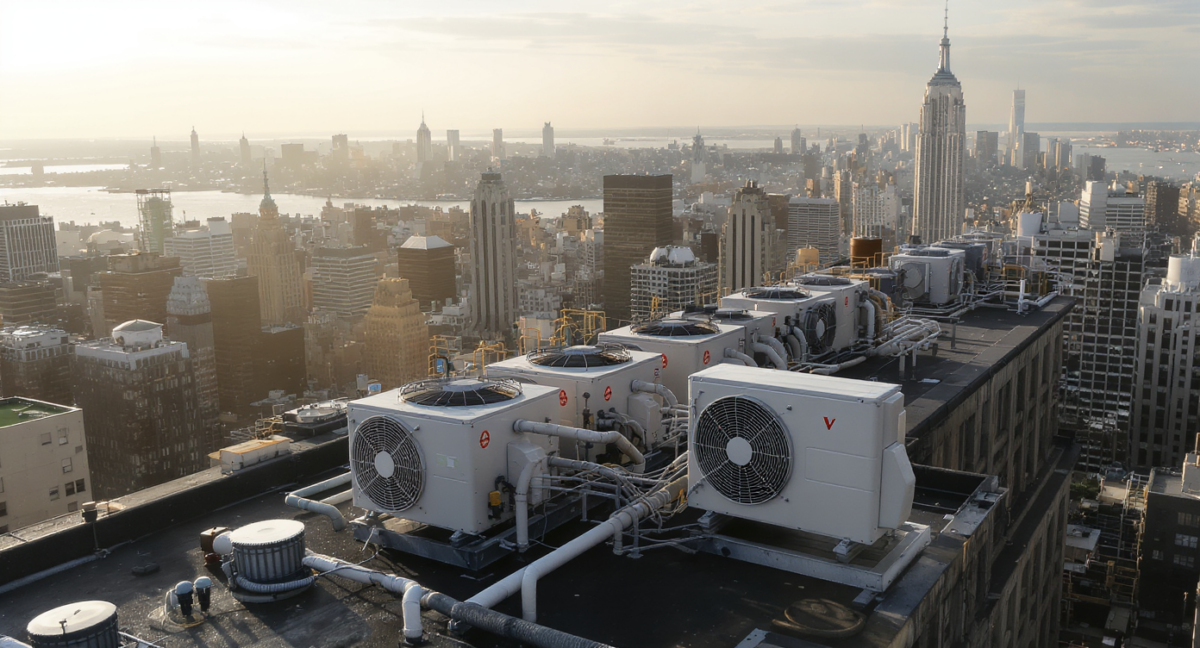
Walk through any new luxury conversion above 14th Street and you’ll find the same mechanical setup: a rooftop of VRF condensers, refrigerant lines routed through a dedicated shaft, and small wall-mounted or ducted indoor units serving each residence. Twenty years ago this would have been unusual. Today it’s the default.
For condo boards weighing a system upgrade or evaluating an in-progress conversion, the question isn’t whether VRF works in luxury residential. It’s whether the board understands what they’re signing up for, both at install and for the next 20 years of ownership.
Why VRF Replaced the Old Standard
The traditional NYC luxury condo HVAC story used to be water-source heat pumps, two-pipe fan coils, or in older buildings, central plant steam paired with through-wall AC units. All three have problems that VRF solves cleanly.
Water-source loops require a central cooling tower and boiler, dedicated mechanical rooms, and constant water treatment. Two-pipe fan coil systems force the entire building into either heating or cooling mode at once, which is a real comfort problem in shoulder seasons when the sunny side of the building wants AC and the shaded side wants heat. Steam is reliable but uncontrollable at the unit level, which is the opposite of what luxury buyers expect.
VRF gives each unit owner independent control. The condensers outside modulate output based on real-time demand from every indoor head in the building. A penthouse calling for cooling and a low-floor unit calling for heat can both get what they want from the same system, especially when the design uses heat recovery rather than standard heat pump.
What Boards Should Know About Noise
This is where conversations with boards get specific. Luxury buyers expect quiet, and VRF is generally quieter than the alternatives, but it isn’t silent. The install matters more than the spec sheet suggests.
Indoor units run anywhere from 19 to 35 dB on low fan speed, which is whisper-quiet. The catch is the refrigerant piping. When lines aren’t isolated properly through floor penetrations or shaft walls, residents will hear refrigerant flow, expansion, and the soft tick of solenoid valves. The condensers on the roof can also transmit vibration through the structure if they’re not mounted on proper isolators sized for the unit weight.
If you’re evaluating a project that’s already installed, find out whether the indoor units are concealed ducted (quieter) or four-way cassette (slightly noisier). For a new spec, push for concealed ducted with returns and supply grilles sized to keep face velocity low. The difference between a well-designed VRF install and a rushed one is most audible to the people who paid the most for the units.
The Real Investment Picture
VRF is not the cheapest option upfront. For a full Manhattan luxury conversion, expect somewhere between $35 and $65 per square foot fully installed, depending on building height, mechanical space, brand, and how clean the existing shafts are. Older pre-war buildings with restrictive vertical chases run higher because the engineering and rigging gets harder.
The operating story is better. VRF is meaningfully more efficient than the systems it usually replaces, particularly in mixed-use or mixed-occupancy buildings where heat recovery can shift energy from a warm side of the building to a cold side instead of buying that BTU twice. For boards looking at Local Law 97 thresholds, that efficiency translates directly into avoided carbon penalties starting in 2030.
Maintenance costs are predictable but real. A proper VRF service contract on a 60-unit luxury building typically runs in the $25,000 to $45,000 per year range, depending on equipment count and scope. That covers filter changes, coil cleaning, refrigerant checks, controls calibration, and a documented inspection record. Buildings that try to save money by cheapening this work usually pay for it later in compressor failures and refrigerant losses.
The 10-Year Service Window
Most VRF systems installed in Manhattan luxury condos between 2014 and 2018 are now hitting the age where component failures start showing up. Boards that bought into the technology in the first wave are seeing this firsthand. A few error codes here, a compressor short-cycling there, refrigerant top-offs that didn’t used to be needed.
This is normal for any commercial HVAC equipment, but VRF has a particular profile. Refrigerant piping is long and complex, often hundreds of feet between condenser and indoor units. Small leaks that would be inconsequential in a split system can starve a far-zone indoor unit and show up as comfort complaints from one specific resident. Branch controllers and BC boxes start to fail in the 10-to-12 year range. Oil return issues in tall buildings show up earlier than the manuals suggest.
None of this is a reason to avoid VRF. It’s a reason to plan for it. Boards making the switch now should budget for major service events in years 10, 12, and 15 the same way they’d plan for elevator modernization or facade work.
What to Ask Before Approving a VRF Project
If your board is evaluating a proposal, a few questions will tell you whether the contractor has done this before in Manhattan luxury residential, or whether they’re treating it like a generic HVAC job.
- What brand and lineset configuration are they proposing, and why that brand for this building specifically?
- How is condenser vibration being isolated from the roof structure?
- What’s the noise spec at the indoor unit and how is the piping isolated through unit walls?
- Is the building going BMS-integrated, or are units controlled independently?
- What’s the proposed PM contract scope and cost for years 1 through 5?
- Who’s responsible for refrigerant compliance reporting under EPA Section 608, and what’s their tracking system?
A contractor who can answer all six clearly has built and serviced these systems in real Manhattan buildings. One who waves them off probably hasn’t.
The Long View
VRF is the right answer for most luxury condo conversions in Manhattan right now. The technology is mature, the major brands have field history in NYC, and the comfort and efficiency story is strong enough that buyers expect it in any premium product. The work for boards is making sure the install is done by people who understand the building, and that the service plan is in place from day one rather than figured out after the first failure.
Mountain Mechanical has been servicing VRF in Manhattan luxury residential since the first wave of installations went in. If your board is evaluating a new project, or your existing system is starting to show its age, call us at 833-504-HVAC.