VRF Systems in High-Rise Buildings: The Challenges Nobody Talks About
May 8, 2026
VRF for Luxury Condos: Why Manhattan Boards Are Making the Switch
May 13, 2026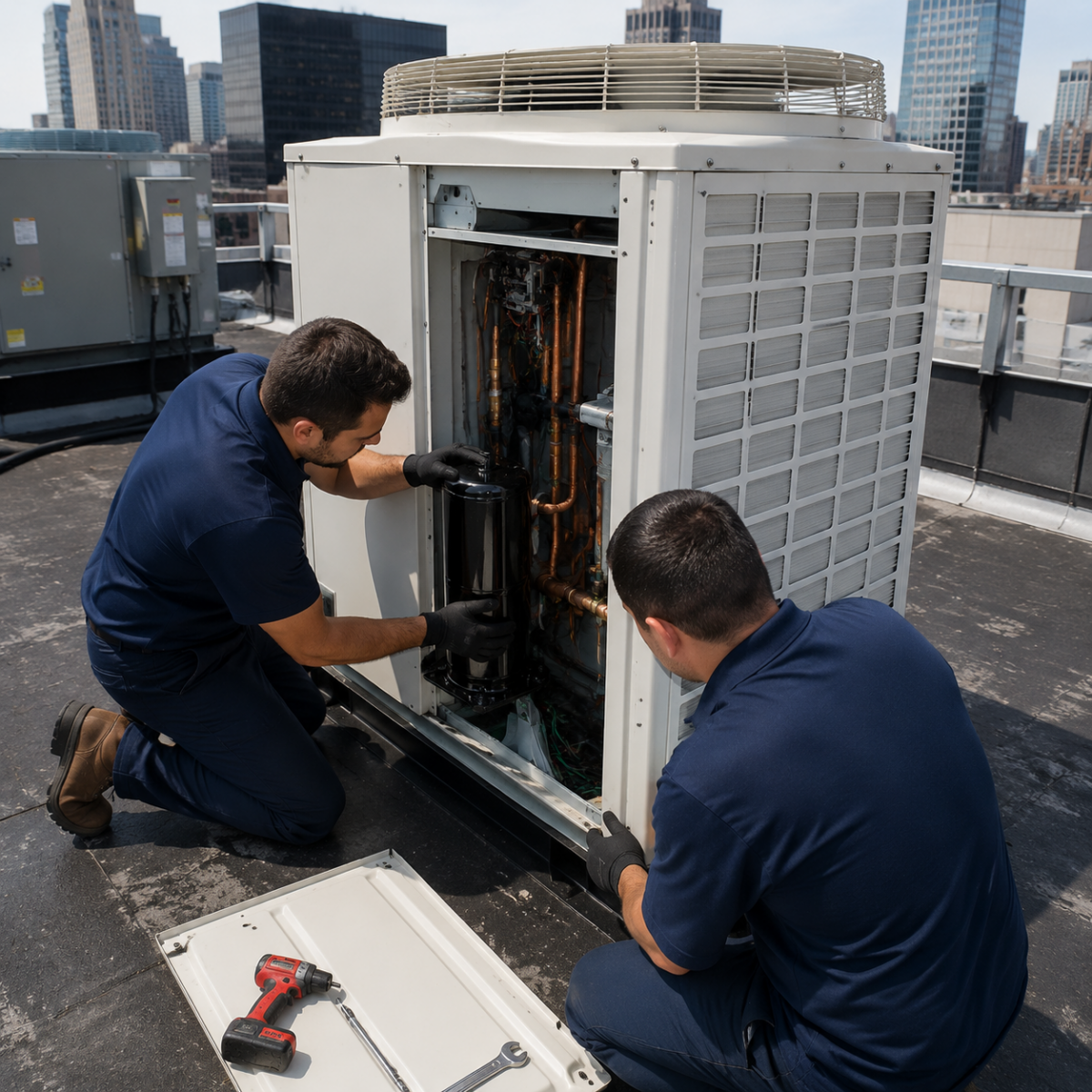
When a VRF compressor fails in a Manhattan high-rise, the first number the building owner hears is rarely the right one. The quote from the first contractor on site tends to leave out crane time, refrigerant recovery, parts lead time, and the cost of a second outdoor unit that’s running on borrowed time. By the time the work is done, the real number is often double the initial estimate.
This is a breakdown of what VRF compressor replacement actually costs in NYC, what drives the variance, and when it makes sense to replace the compressor versus the whole system.
What Drives VRF Compressor Replacement Cost
A VRF compressor replacement is not a one-line item. The total cost is a stack of parts, labor, access, and code-driven work that varies more than most owners expect. The biggest drivers are brand, location of the outdoor unit, system size, and whether the failure took the refrigerant charge with it.
For a typical Manhattan commercial install, expect the compressor itself to run anywhere from $4,500 to $18,000 depending on tonnage and brand. Daikin VRV and Mitsubishi City Multi compressors for 10-14 ton modules generally land in the $8,000 to $14,000 range for the part alone. LG Multi V and Samsung DVM compressors in the same class are usually a bit less, often $6,000 to $11,000. Fujitsu Airstage parts can be the wildcard, sometimes longer lead times push the price up regardless of MSRP.
Labor for the swap itself, assuming reasonable access, runs $4,000 to $9,000. That covers refrigerant recovery, mechanical removal, brazing, evacuation, and recharge. Add commissioning and controls verification on top.
Where the Numbers Get Big: Crane Time and Rigging
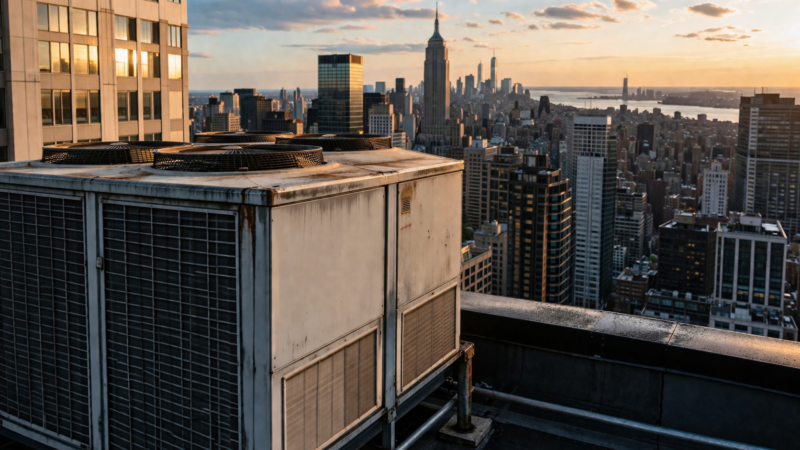
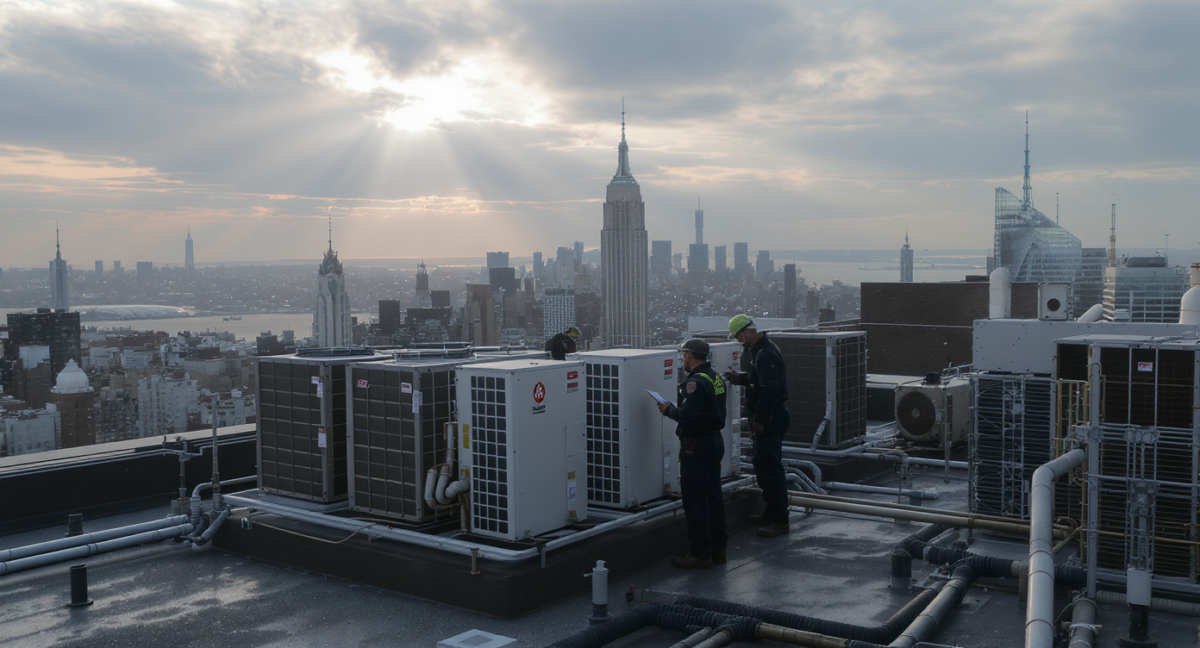
For rooftop VRF units on Manhattan high-rises, crane and rigging is often the single largest line item. We’ve seen crane setups for Midtown towers run anywhere from $6,000 for a small mobile unit doing a partial decomp lift, up to $40,000 or more when a street closure permit, NYPD detail, and an extended-reach crane are required.
A few things make this worse in NYC. Street width matters: narrow streets or buildings without a viable crane setback can force a smaller crane positioned further away, which means a longer boom and a heavier rental class. Permit lead times from DOT add weeks. Weekend or off-hour work for tenant-occupied buildings adds premium labor rates.
On the other end, when the outdoor unit is in a courtyard or on a setback that can be accessed by a smaller crane or even a high-rise lift, the rigging cost can drop to a few thousand. Always get the rigging estimate before agreeing to a compressor swap. It’s the number that surprises people.
Refrigerant Recovery and Recharge
VRF systems carry serious refrigerant volumes. A single 10-ton outdoor unit might hold 25 to 35 pounds of R-410A, and a connected system with long piping runs in a high-rise can hold 60 pounds or more across the outdoor module and pipework.
If the failure took the charge, you’re paying for new refrigerant at the current market rate. R-410A pricing has been volatile through the phase-down. Budget $40 to $80 per pound, sometimes more depending on the supplier and the week. On a system that needs 60 pounds, that’s $2,400 to $4,800 in refrigerant alone.
If the charge was recovered properly before the failure progressed, you save that line item, but recovery itself takes time and certified equipment. A clean recovery on a large system can add a full day of labor.
When Compressor Replacement Makes Sense
The decision usually comes down to age, repair history, and what else is showing wear. A compressor failure on a 6-year-old Mitsubishi City Multi with no other issues is almost always a straightforward repair. Parts are available, the rest of the system has useful life left, and you’re protecting the original capital investment.
The math gets harder around year 10. If you’re looking at a $25,000 to $45,000 total compressor job on a system that’s already had board failures, refrigerant leaks, or branch selector issues, you have to weigh that against the cost of a planned full replacement. Most building owners we work with use a version of the 60 percent rule: if a single repair pushes you past 60 percent of replacement cost, it’s hard to justify.
For Manhattan commercial buildings, full VRF system replacement on a 20 to 40 ton system typically runs $80,000 to $250,000 depending on access, controls integration, and whether piping can be reused. The replacement decision also opens the door to R-32 systems with better part availability and Local Law 97 emissions improvements, which matters if you’re tracking the 2030 thresholds.
Lead Times and Planning
Compressor lead times have been the quiet pain point of the last two years. For the most common Daikin and Mitsubishi parts, NYC distributors usually stock or can pull within a week. For less common modules, particularly older Fujitsu and Samsung, we’ve seen 4 to 8 week lead times in 2025 and 2026.
If the compressor failure happened in cooling season and the building can’t go without conditioning, factor in temporary rental units, spot coolers, or load shedding through the heat. Those costs add up fast on a Class A office tower.
The smartest move for building managers running second-decade VRF systems is to plan for it. Know which outdoor units are most likely to fail next based on age and run hours, get crane access pre-quoted, and have a brand-specific contractor relationship before the failure. A planned compressor replacement on a shoulder season weekend costs a fraction of an emergency one in July.
How to Read a Compressor Replacement Proposal
When you get a quote, make sure it breaks out parts, labor, refrigerant, crane and rigging, commissioning, and disposal separately. Lump-sum quotes hide where the variance lives. If a contractor won’t give you a line-item breakdown, get a second proposal.
Ask whether the new compressor comes with a manufacturer warranty and what that warranty actually covers in a commercial install. Some brands void warranty coverage if the system wasn’t on a documented PM contract at the time of failure.
Mountain Mechanical has been servicing VRF systems across Manhattan since they started appearing on rooftops. If you’re staring down a compressor failure and you’re not sure whether to repair or replace, give us a call at 833-504-HVAC. We’ll walk through the math with you before anyone climbs on the roof.