Mitsubishi City Multi Troubleshooting: The Most Common Issues We See
May 1, 2026
LG Multi V Service in Manhattan: What Building Managers Should Know
May 5, 2026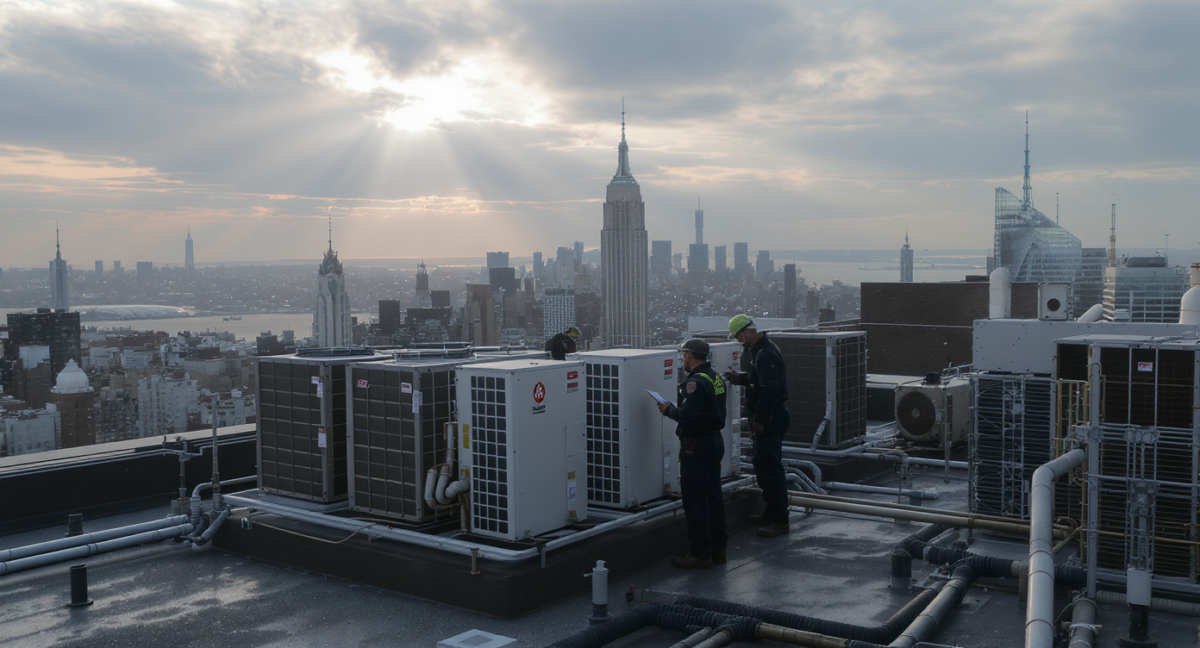
The honest answer to how often a commercial VRF system should be serviced depends on the building, the brand, the age of the equipment, and how the system gets used. The shorter answer, and the one most building managers want first, is twice a year for systems under eight years old, and quarterly for anything past that. That cadence assumes the work being done on each visit is actually thorough.
The problem is that most VRF service contracts in NYC are sold by frequency without a clear definition of what each visit covers. A twice-a-year contract that amounts to filter changes and a visual inspection is not maintenance. It is paperwork. The frequency only matters if the scope of each visit catches the issues that actually cause failures.
What a Proper VRF Maintenance Visit Includes
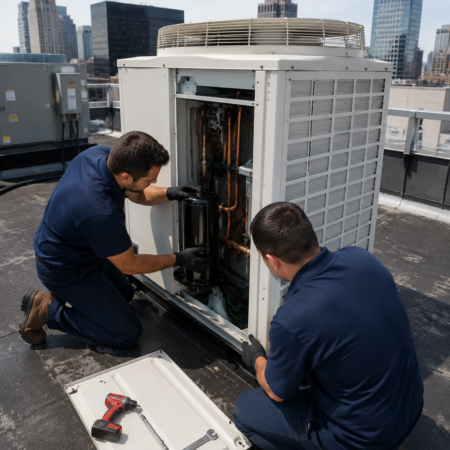
A complete preventive maintenance visit on a commercial VRF system is not a 90-minute walk-through. On a typical Manhattan high-rise install with one or two outdoor units and 30 to 60 indoor units, a real PM visit takes most of a day, sometimes two.
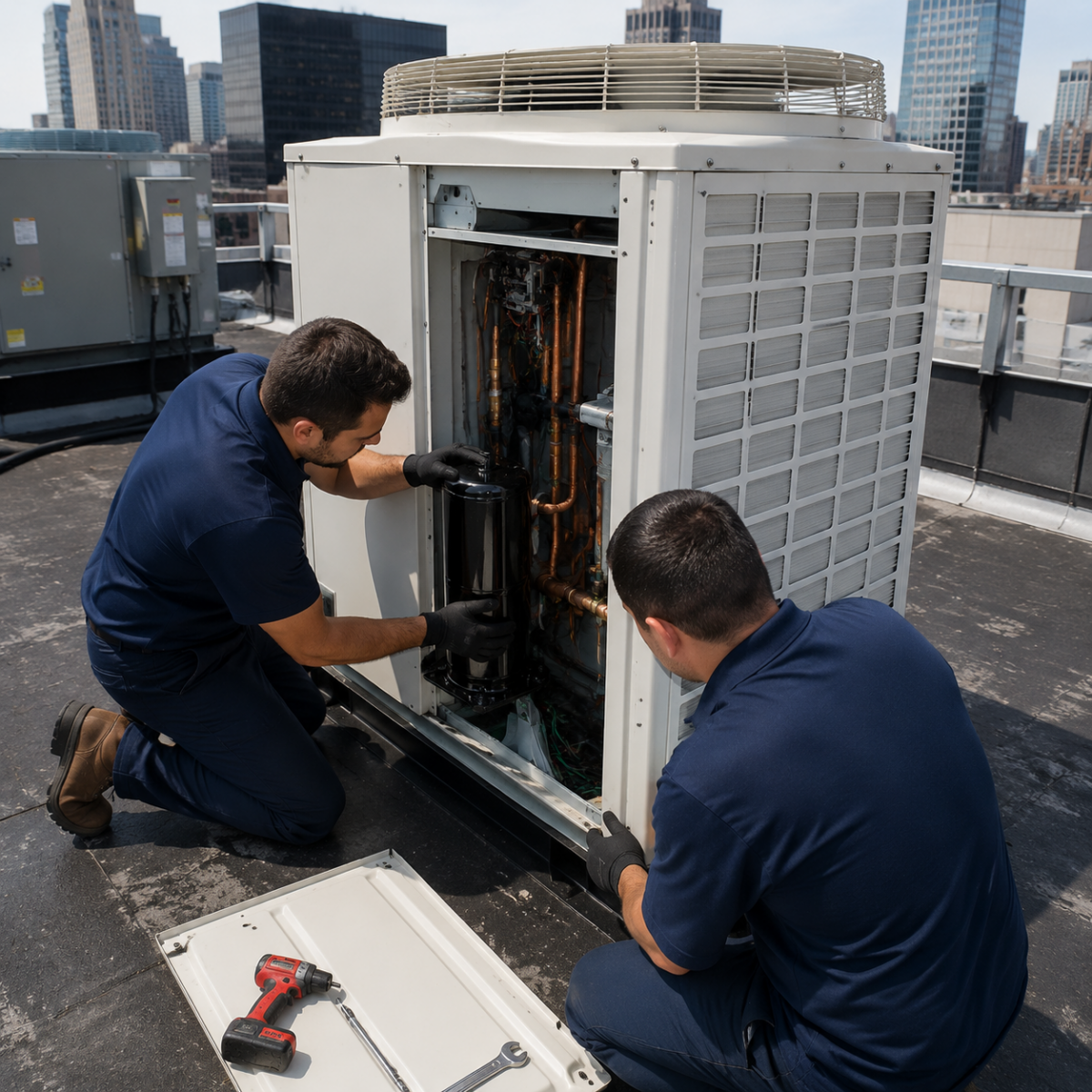
The work breaks down across the refrigerant circuit, the air side, the controls network, and the outdoor units. Refrigerant-side checks include reading superheat and subcooling at the outdoor unit, verifying charge against manufacturer spec, and checking discharge and suction pressures across operating modes. Air-side work covers coil cleaning at every indoor unit, blower wheel inspection, condensate drain pan and trap service, and filter replacement.
Controls work includes pulling error history from the system controller, verifying communication bus voltage and signal integrity, and checking that every indoor unit is reporting back to the network correctly. On outdoor units, the work covers condenser coil cleaning (which matters more than people think on rooftop installs in midtown where the coils pull in everything), inverter board inspection, and a full check of fan motor bearings and capacitor health.
If your current contractor is in and out in two hours and only touched the outdoor units, you are not getting a real PM. You are getting a reason to write a check.
Why Maintenance Frequency Changes With Age
VRF systems do not degrade linearly. The first five to seven years of operation are generally low-incident. The system has full factory charge, the components are within their design margins, and most warranty issues have already been resolved during the first year of ownership.
Past the eight-year mark, the failure curve starts to bend. Brazed joints that were perfect at install begin to develop micro-leaks from thermal cycling. Inverter boards exposed to summer condenser heat and winter freeze cycles start to drift. Compressor oil chemistry changes. Refrigerant charge slowly drops below the threshold where the system can compensate.
This is the wave we are seeing right now in Manhattan. The systems that went in during the 2012 to 2016 build-out are now 10 to 14 years old. The buildings that did proper quarterly maintenance through the critical window are running clean. The buildings that did once-a-year filter changes are now looking at compressor replacements and full system evaluations.
For systems past eight years old, quarterly visits stop being a luxury. They are the difference between catching a developing refrigerant leak in March and replacing a burned-out compressor in July when the building has no cooling and a crane needs to be staged on 8th Avenue.
How NYC Conditions Change the Math
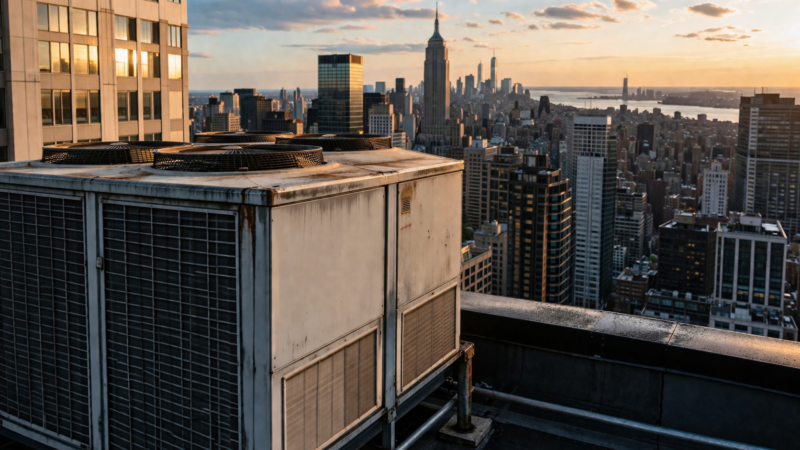
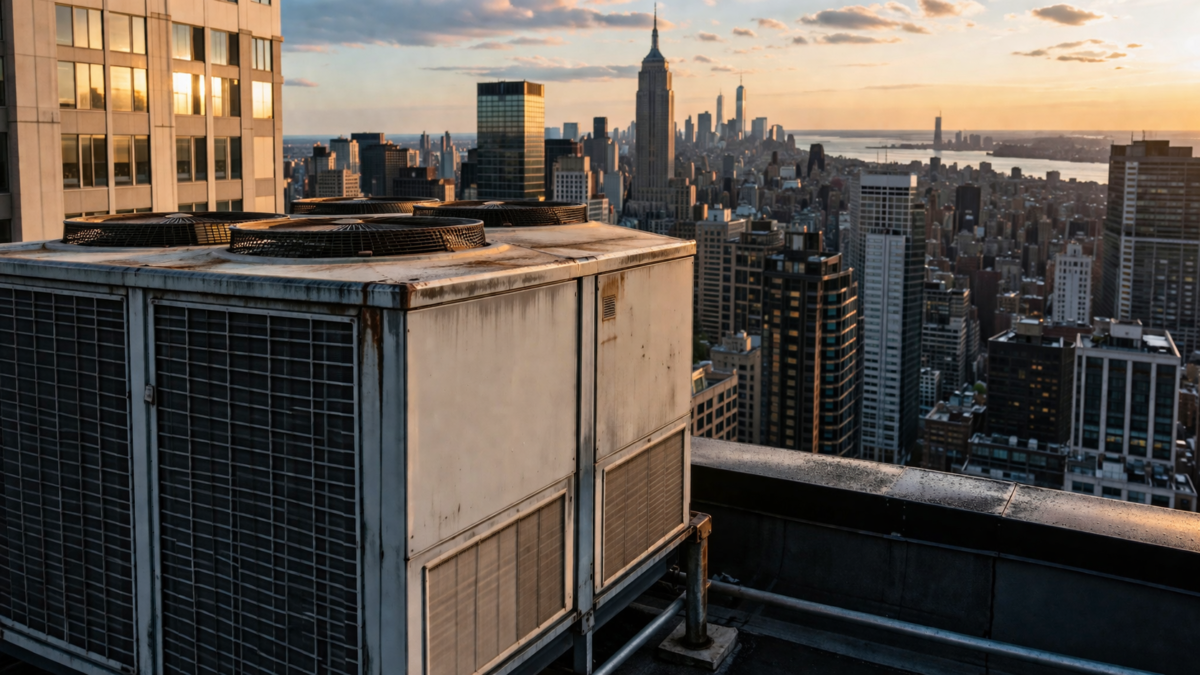
Manhattan and the outer borough commercial markets put VRF systems under conditions that suburban installs do not face. Rooftop units in midtown deal with airborne particulate from construction dust, generator exhaust, and HVAC return from neighboring buildings. Coils foul faster. Saltwater air across waterfront buildings in TriBeCa, Battery Park, DUMBO, and along the East River accelerates corrosion on condenser fins and electrical components.
High-rise installations add their own complexity. Long refrigerant piping runs increase the surface area where leaks can develop, and oil return becomes a real concern as the system ages. Buildings with mixed-use loading, like a hotel with conference space or a Class A office with a ground floor retail tenant, run their VRF systems harder than a typical office tower because the load profiles never settle.
None of this changes the basic maintenance cadence, but it does change what each visit needs to focus on. A waterfront building needs more frequent coil and electrical inspection. A high-rise install needs closer attention to oil return and pressure differentials. A mixed-use building benefits from more granular runtime data analysis to spot zones that are working harder than the design intended.
The Business Case for a Service Contract
Most building managers approach the maintenance question as a line-item cost. The better way to look at it is reserve protection. A VRF compressor replacement on a Manhattan rooftop runs $12,000 to $25,000 depending on brand and access. A full outdoor unit replacement, including crane and rigging, can hit $60,000 to $120,000 on a high-rise. A refrigerant leak that goes undetected long enough to damage the compressor turns a $4,000 repair into a $30,000 one.
A real quarterly service contract on a typical 30-zone Manhattan install runs $8,000 to $14,000 a year. Over a five-year window, that contract costs less than a single avoidable compressor replacement. And it buys you the diagnostic visibility to make informed capital decisions about replacement timing instead of reactive ones.
The other thing a proper service contract buys you is response priority. When something does fail, the buildings under contract get scheduled first. The buildings that called once a year for filter changes go to the back of the queue, and in July or January, that queue is long.
What to Look For in a VRF Service Proposal
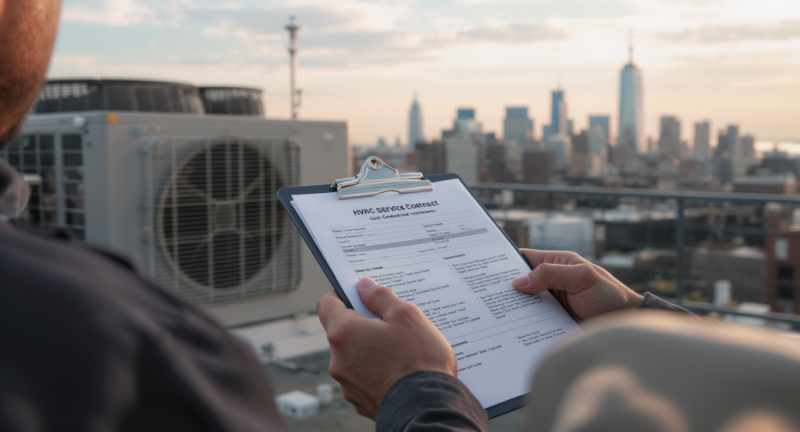
If you are evaluating a service contract from any contractor, ask for the scope of work in writing for each visit. The proposal should specify exactly what is checked, measured, and cleaned at each visit. It should name the diagnostic tools that will be used, particularly the manufacturer-specific software for your system brand. It should include after-hours emergency response terms and a defined response time.
If a contractor cannot tell you what their visits actually cover, or if the proposal reads like generic boilerplate that could apply to a residential split system, keep looking. VRF service is specialty work and the contract should reflect that.
Need Help Evaluating Your Current Maintenance Setup?
Mountain Mechanical has been servicing VRF systems across Manhattan, Brooklyn, and Long Island since the first commercial installs went in. If you are not sure whether your current maintenance program is doing what it should, or you are looking at a service contract proposal and want a second opinion, give us a call at 833-504-HVAC. We can audit what is in place and tell you straight whether the system is being serviced the way it needs to be.