How Often Should Your VRF System Be Serviced?
May 1, 2026
VRF Systems in High-Rise Buildings: The Challenges Nobody Talks About
May 8, 2026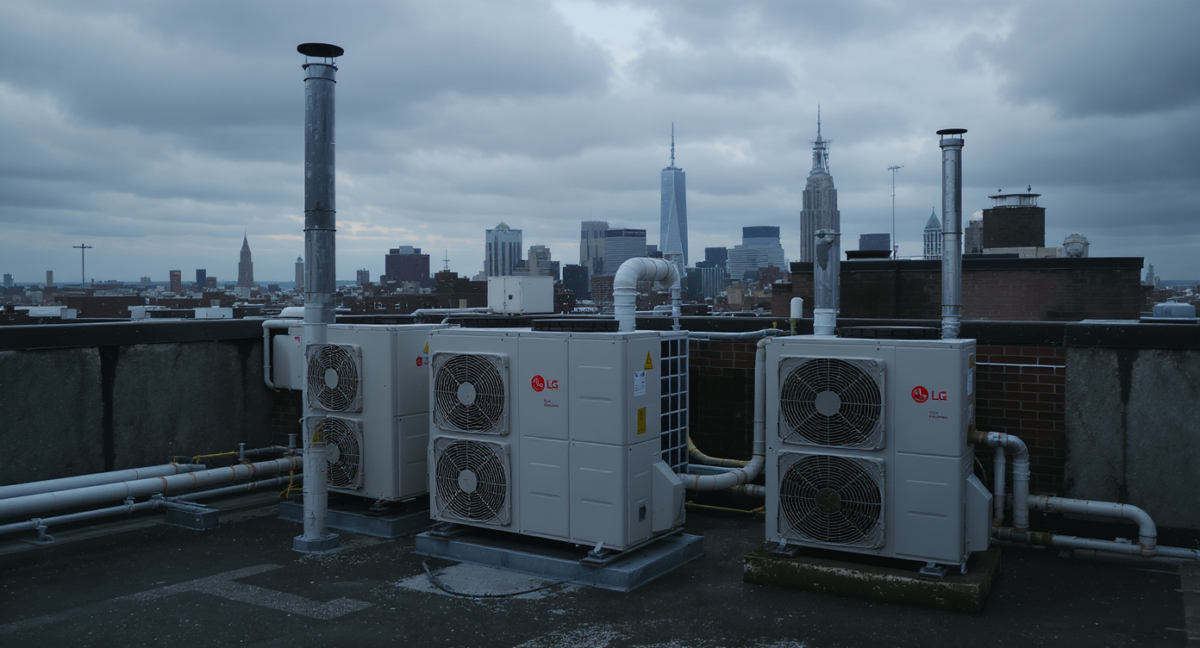
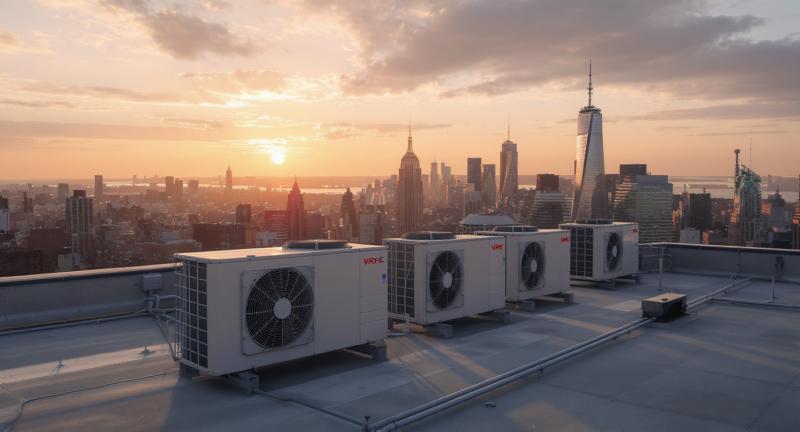
LG Multi V used to be the third option building owners considered after Daikin and Mitsubishi. That has changed in the last five years. We are seeing Multi V show up on more rooftops across Manhattan, especially in newer mixed-use builds and ground-up commercial projects from 2018 onward. The price point is competitive, the equipment is solid, and the engineering specs are strong.
But every brand has its quirks, and Multi V is no exception. If you are managing a building with LG Multi V running on it, here is what we see in the field at the 5 to 8 year mark, and what you should be asking your service contractor about.
LG Multi V Service in NYC: Common Issues at 5 to 8 Years
Most of the LG Multi V systems we are now servicing in Manhattan were installed between 2018 and 2021. They are entering the window where the easy-warranty years are over and real maintenance issues start surfacing.
The most common service calls we get on Multi V at this age fall into a few categories. Communication board failures on the outdoor unit, often after a power surge or a building electrical event. Inverter board issues that present as intermittent shutdowns and inconsistent capacity. Sensor drift on suction and discharge thermistors, which throws off the system’s ability to manage refrigerant flow. And expansion valve sticking, particularly on indoor units that have not had filter service done on schedule.
None of these are catastrophic, but they tend to compound. A drifting thermistor can mask a small refrigerant loss for months. A flaky comm board can hide a real compressor issue until it cascades into a much bigger repair. The systems give you warning signs early. The trick is knowing what you are looking at.
Parts Availability Is the Real Challenge
This is where Multi V differs from the older Daikin and Mitsubishi platforms in a way that matters for a building manager. Parts.
LG’s parts distribution in the NYC metro is not as deep as Daikin or Mitsubishi. Their network has improved, but it is still common to wait 5 to 10 business days on a board, sometimes longer on inverter components for the larger ARUM and ARUN heat recovery units. We have had buildings down for two weeks waiting on a single PCB.
Two things help here. The first is having a service contractor who stocks common Multi V parts directly, not just one who orders through LG distribution. The second is preventive replacement of known weak components on systems past the 6 year mark, especially if you have already had one comm board fail. If a building has had one PCB go down, the others are usually not far behind.
If your contractor’s answer to a board failure is always “we have to order it,” that is a red flag. On critical systems serving occupied space, that lead time becomes a liability.
Compressor Oil Return in High-Rise Installs
This one is specific to Manhattan, and it is the issue we get called on most often when a Multi V is running in a tall building.
VRF systems rely on returning compressor oil through long refrigerant piping runs. In a 30-story building with rooftop condensers, the system has to carry oil up and back down through hundreds of feet of pipe. LG’s oil management is competent, but Multi V is more sensitive to install quality on the piping side than some competitors. Oil traps that were not installed correctly, undersized vertical risers, or piping runs that exceed the design length without proper accommodation will cause oil return problems within the first 5 years.
The symptoms are usually subtle at first. Compressor noise that gets louder over a season. Capacity falloff in the floors furthest from the condensers. Eventually a compressor failure that costs ten times what catching the oil issue earlier would have cost.
If you inherited a building with Multi V already installed, ask your contractor whether they have ever pulled an oil sample and tested it. That data tells you whether the system is running clean or whether it is heading toward trouble. It is a 30 minute test and it can save you a compressor.
What a Real Multi V Service Plan Should Include
A proper service plan on an LG Multi V system in NYC should cover more than filter changes and a refrigerant top-off. We tell our building manager clients to look for a contractor who handles a few specific things.
Annual oil sample analysis on systems past the 5 year mark. Comm board firmware updates when LG releases them, which most contractors skip entirely. Thermistor calibration checks rather than just visual inspection. And piping inspection on vertical risers and oil trap locations, especially after building work that may have disturbed insulation or hangers.
The other thing worth asking about is the contractor’s relationship with LG technical support. Multi V troubleshooting often requires getting on the phone with LG’s tech line for systems with unusual error patterns. A contractor with a real LG account and direct tech support access can resolve things in hours that would otherwise take days.
If You Manage a Building With LG Multi V
The aging-install wave on Multi V is just starting to hit. Systems installed in the 2018 to 2021 window are now entering the period where preventive service stops being optional. The buildings that get ahead of this with proper maintenance and a contractor who actually knows the platform will avoid the kind of unplanned outages that wreck a season.
Mountain Mechanical has been servicing VRF in Manhattan since the first systems went in. If you are managing a building with LG Multi V and want a real assessment of what condition it is in, give us a call at 833-504-HVAC.