When to Replace vs. Repair Your Commercial HVAC System
June 16, 2026
VRF Uneven Temperatures: Why Some Zones Never Reach Setpoint
June 30, 2026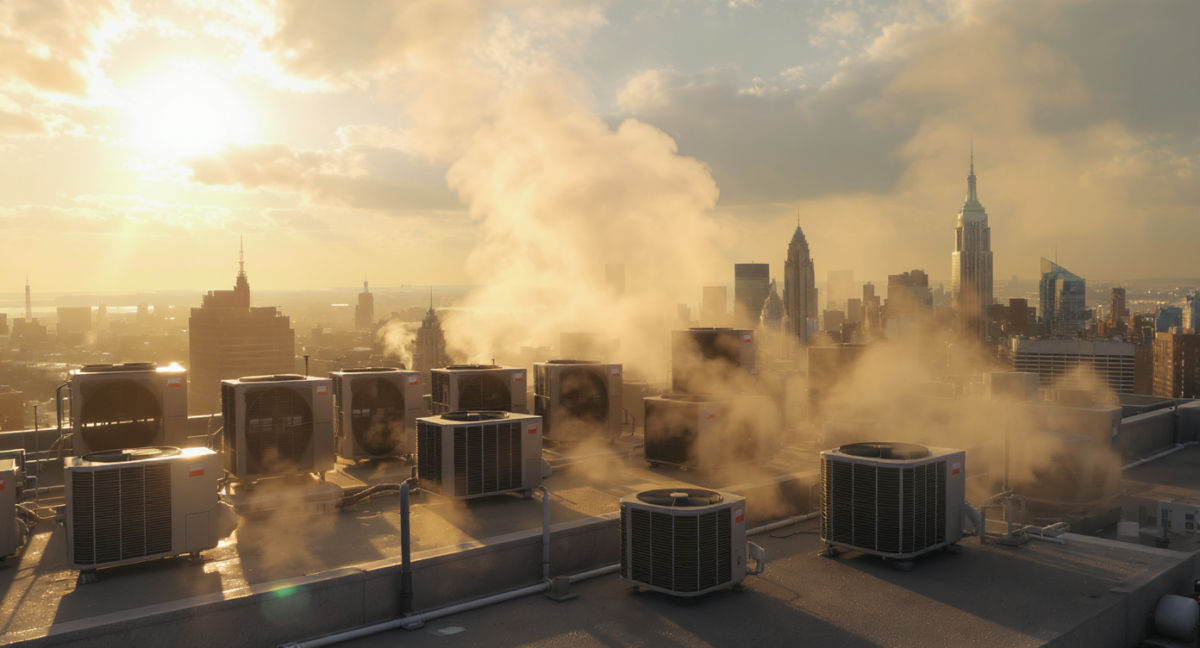
When a VRF system stops cooling during a Manhattan heat wave, the calls start fast. Tenants on the sunny side of the building feel it first, the lobby thermostat reads four degrees over setpoint, and you are trying to figure out whether this is a quick fix or the start of a bad week. Before you escalate, there are a handful of things worth checking, and a few signs that tell you to stop and call a contractor.
This is the peak-load season where weak VRF systems show their age. A system that limped through spring will struggle the first time outdoor temperatures sit in the 90s for three days straight.
Start with the basics before you call anyone
Most of the time the first checks cost nothing. Confirm the indoor units are actually set to cool and not stuck in auto or fan-only mode. In buildings with shared controls or a BMS front end, a scheduling override or a single wrong setpoint can make a whole floor feel like the system failed.
Check the filters. Loaded filters choke airflow across the indoor coils, and when airflow drops, capacity drops with it. In a Class A office with heavy occupancy, filters can blind off faster than the PM schedule assumes, especially during construction or renovation on a tenant floor.
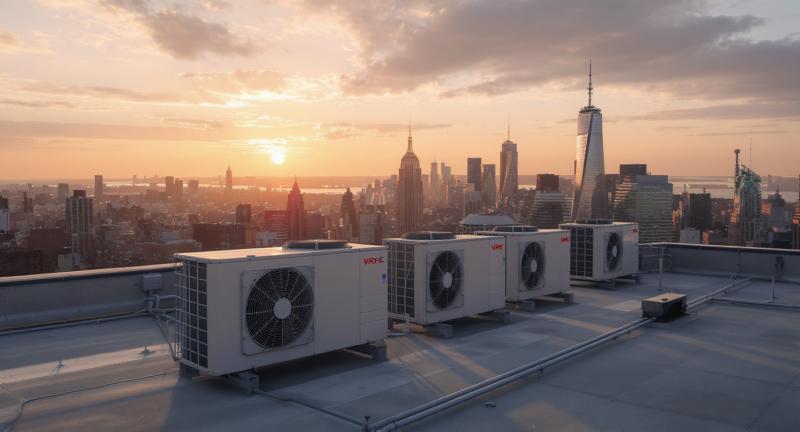
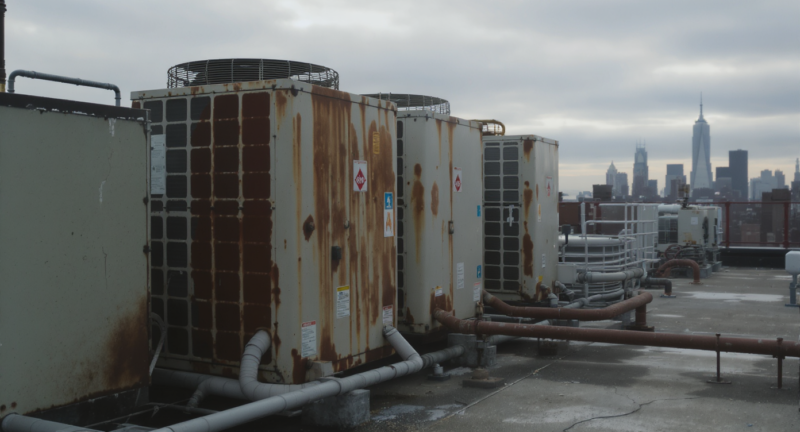
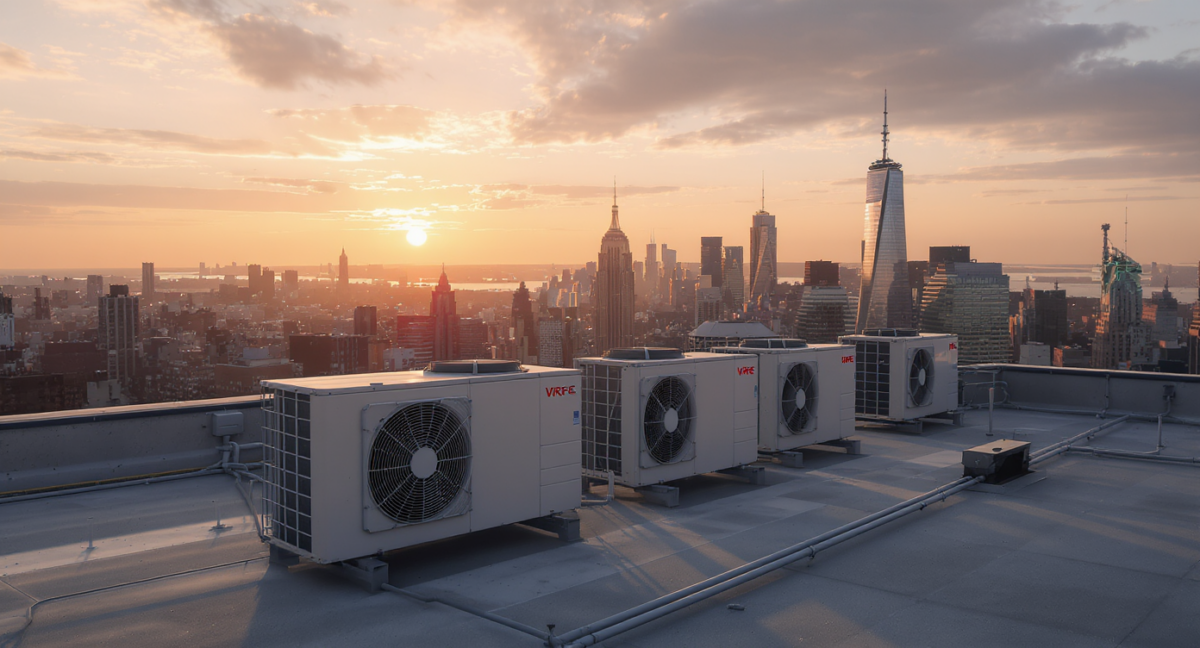
Look at the outdoor condensers too. Rooftop units packed with cottonwood, debris, or restricted by something stacked too close will lose their ability to reject heat. On a 95 degree afternoon, a dirty condenser coil is often the difference between a system that holds setpoint and one that trips on high pressure.
One zone or the whole system?
The pattern of the failure tells you a lot. If a single indoor unit or one branch is warm while the rest of the building is fine, you are usually looking at a local problem. A failed indoor fan motor, a stuck expansion valve, a bad branch controller, or a thermistor reading wrong. The system is running, it just is not delivering to that zone.
If the entire system is down or every zone is drifting up together, the problem is upstream at the condensing units. That points to refrigerant, compressor, or a system-wide fault the controls have flagged. Pull the error history off the outdoor unit or the central controller before anyone resets anything. Those codes are the fastest path to the real cause, and clearing them throws away the evidence.
Refrigerant charge and the summer load problem
VRF systems are sensitive to charge in a way that packaged equipment is not. A long piping run in a high-rise holds a large refrigerant volume, and a slow leak that went unnoticed all winter can leave the system short right when it needs full capacity. The symptom shows up as a system that cools fine in mild weather and falls behind only when the load climbs.
You cannot diagnose a charge problem from the lobby. It takes gauges, subcooling and superheat readings, and a tech who knows the manufacturer’s charging method for that model. But if your system cools at night and gives up every afternoon, an undercharge from a developing leak is high on the list. Topping it off without finding the leak is a temporary fix that fails again, usually at a worse time.
Compressor and head pressure at peak load
High outdoor temperature drives up condensing pressure, and a system already weak on heat rejection will start protecting itself. You will see high-pressure faults, short cycling, or capacity that drops off as the day heats up. Inverter compressors derate to survive, which the controls read as normal even though the building feels the loss.
On older systems this is where real failures begin. Compressor windings, oil return problems in tall risers, and degraded inverter boards all surface under sustained peak load rather than in spring. If you are getting repeat high-pressure trips on a hot afternoon, that is not something to keep resetting. Each trip is the system telling you it cannot keep up.
The aging-install factor
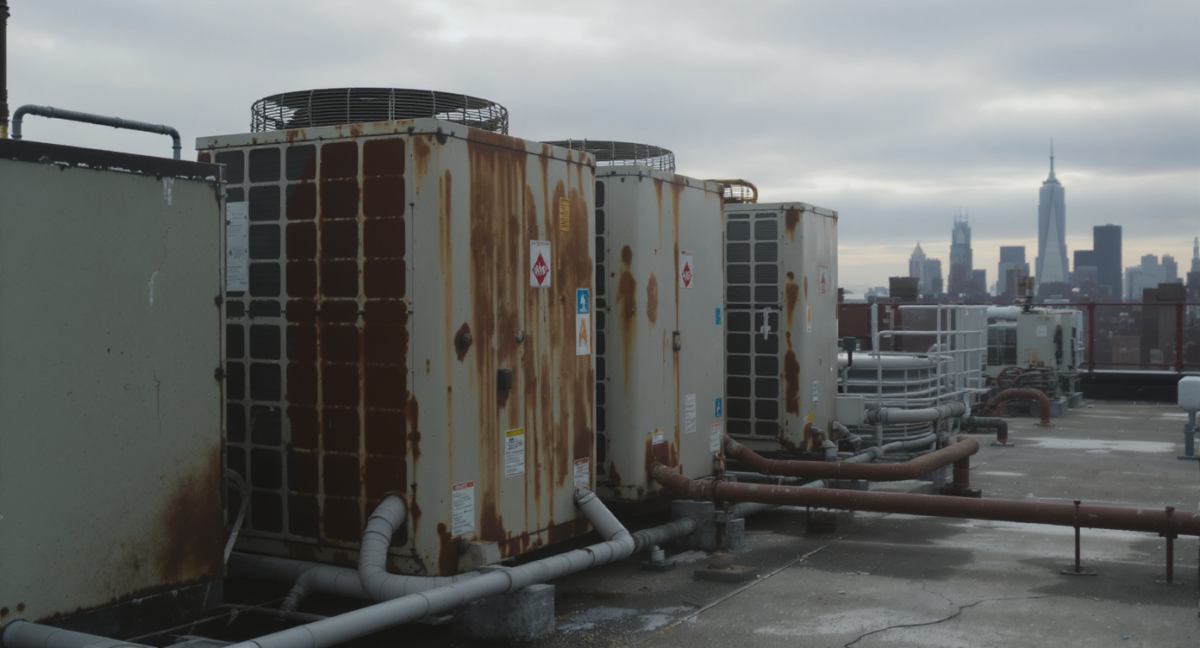
A lot of the VRF in Manhattan went in during the 2012 to 2016 build wave, which puts those systems at 10 to 14 years old now. That is the range where summer becomes the season that exposes everything. Seals that were fine under light load start weeping, capacitors and boards that ran hot for a decade pick the worst day to quit, and refrigerant that has slowly migrated out finally drops below what the system needs at full capacity.
If your building is in that age bracket and cooling performance is slipping each summer, it is usually not one bad part. It is a system entering the window where small problems compound. Planning for that is cheaper than reacting to a full outage in August.
When to bring us in
If you have checked filters, setpoints, and the condensers and the system still will not hold cooling, or if you are seeing repeated error codes and high-pressure trips, that is the point to stop and get a tech on site. We have been servicing VRF across Manhattan since these systems first went in, and we know how Daikin VRV, Mitsubishi City Multi, LG Multi V, and Samsung DVM behave when the load peaks. If your building is fighting the heat right now, give us a call at 833-504-HVAC.