
NYC Energy Benchmarking and Your HVAC System: What the Numbers Are Telling You
May 29, 2026
Samsung DVM VRF Systems: What We’re Seeing in NYC
June 9, 2026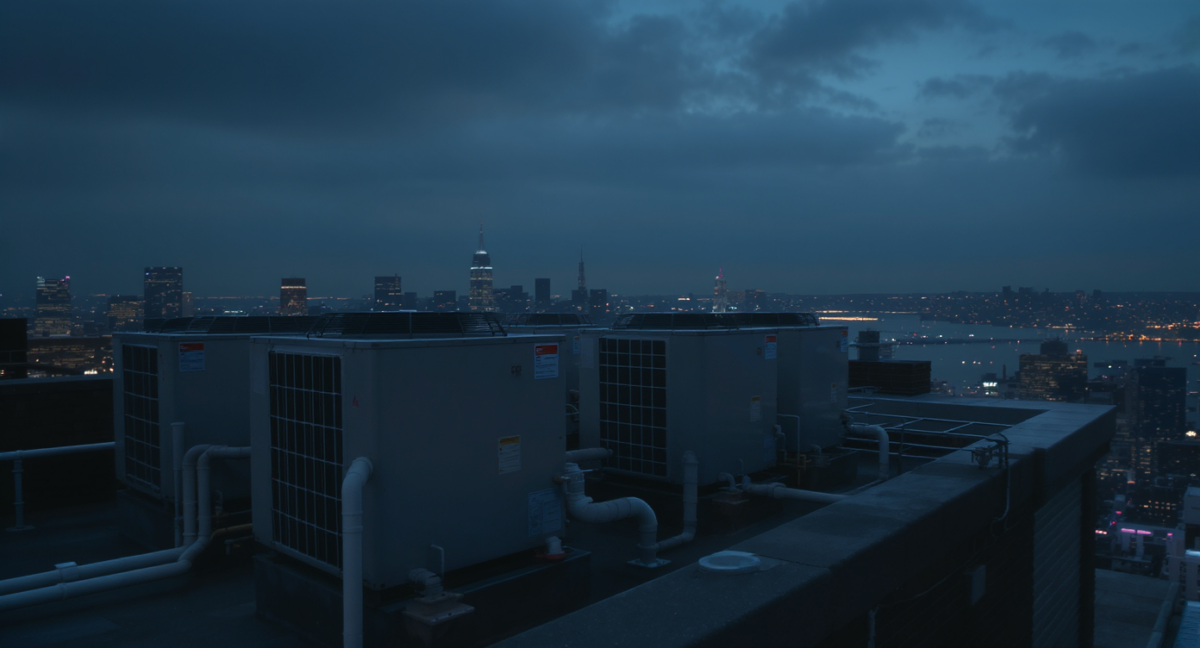
A guest checks into a room on the 14th floor of a Midtown hotel, sets the thermostat to 68, and expects it to hold all night. The room next door wants 74. The conference space two floors down is packed and dumping heat, while the north-facing rooms on the same line are calling for warmth. A PTAC unit under every window cannot manage that range without running hard, wearing out, and generating the kind of noise that ends up in a review. This is the comfort problem VRF was built to solve, and it is why so many NYC hospitality properties are converting.
VRF hotel HVAC in NYC has moved from a niche luxury spec to a default consideration on most renovation and conversion projects. The drivers are guest comfort, energy cost, and the maintenance burden that comes with aging window units. For operators running properties built or last renovated in the PTAC era, the math has shifted.
Why PTAC and fan coil systems fall short in hotels
Most older NYC hotels run on packaged terminal air conditioners, one unit per room, sleeved through the exterior wall. They are cheap to install and simple to replace, which is exactly why they got specified for decades. The problem is what they cost you over a 15-year hold.
PTAC units are loud. The compressor cycles on and off right under the window, a few feet from the guest’s head. They are also inefficient, with no meaningful zoning intelligence and no way to recover heat from one part of the building to serve another. When the units age, they leak, they ice up, and they get pulled and swapped one at a time by your engineering staff. A 200-room property can be replacing a dozen units a year just to stay ahead of failures.
Fan coil systems, common in mid-century towers, solve some of the noise issue but bring their own headaches. Two-pipe systems force the whole building into heating or cooling mode seasonally, which is a real problem during NYC shoulder seasons when a sunny south face needs cooling and the shaded north rooms need heat on the same afternoon. Four-pipe systems handle that but at a much higher install and maintenance cost.
What VRF actually changes for guest comfort
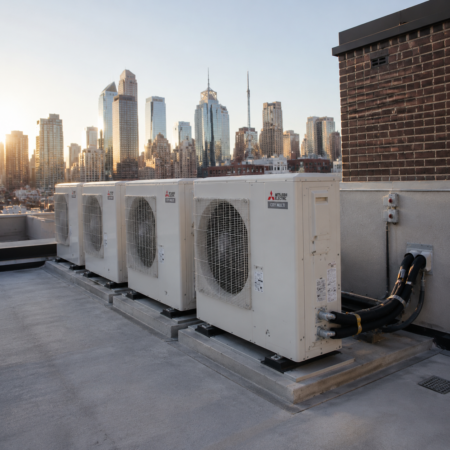
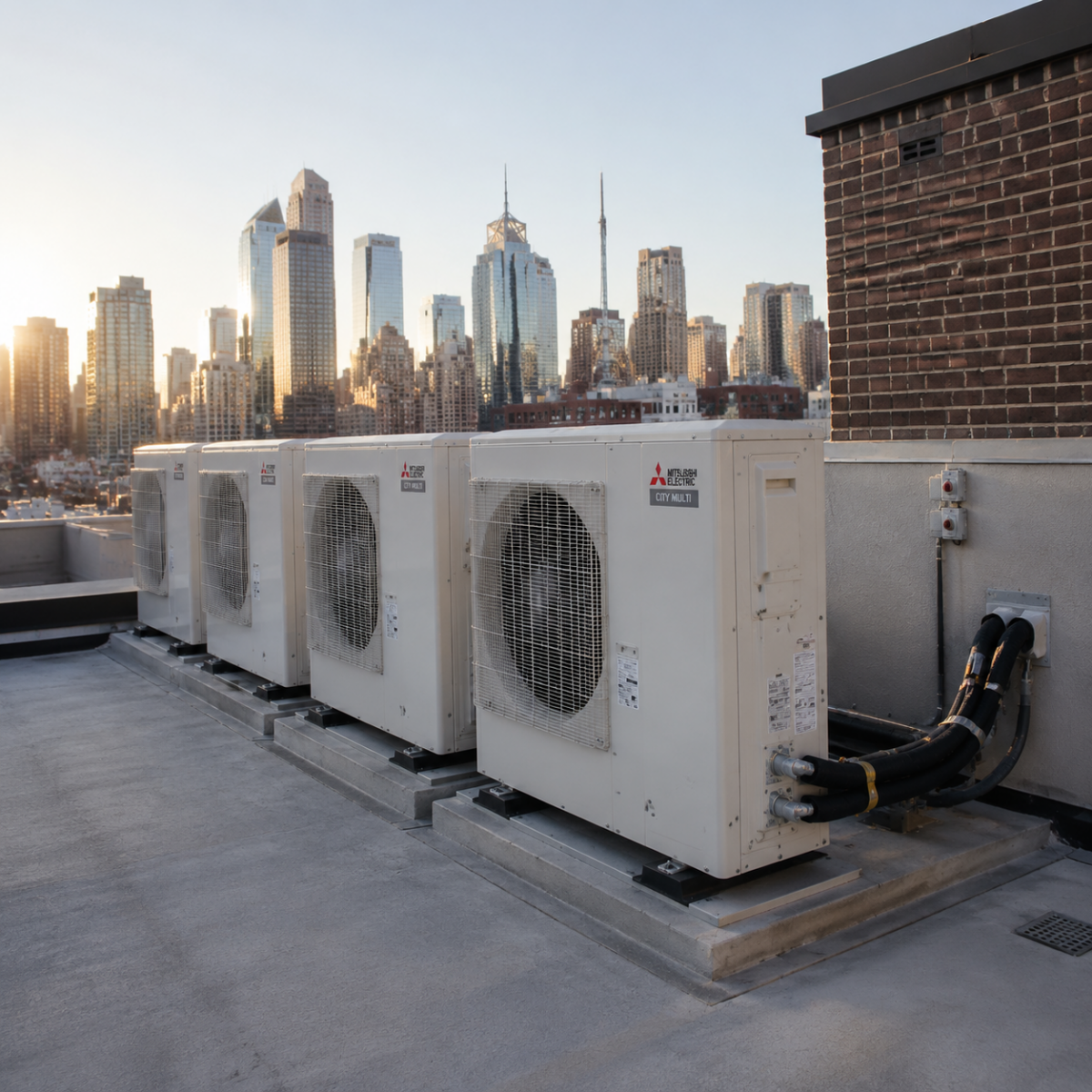
VRF gives every room its own zone with quiet, precise temperature control. The indoor units are typically concealed or low-profile, and the loud component, the compressor, sits on the roof instead of under the bed. Guests notice the difference, and so do your review scores.
The bigger advantage is heat recovery. A heat recovery VRF system can take the heat it removes from a sunny guest room or a crowded ballroom and move it to a room that is calling for warmth, all within the same refrigerant loop. In a building with a varied load profile, which describes almost every hotel, that simultaneous heating and cooling is where the energy savings come from. You are not paying to make heat and reject heat at the same time the way a PTAC building does.
Zone-level control also means the back-of-house and unoccupied rooms can setback automatically when integrated with the property management system. A floor that is half-booked on a Tuesday in February does not need to condition empty rooms at full setpoint.
The energy and compliance case
Energy cost is the line that gets a VRF conversion approved. NYC commercial electric rates are among the highest in the country, and a high-efficiency VRF system with heat recovery routinely cuts HVAC energy use against an older PTAC or two-pipe baseline. For a property carrying a heavy summer cooling load behind a glass curtain wall, the savings compound fast.
Then there is Local Law 97. Hotels over 25,000 square feet fall under the carbon emissions caps, and the limits tighten in 2030. A building still running gas-fired heat and aging electric cooling is exposed to penalties that scale with how far over the cap it sits. VRF, especially heat pump and heat recovery configurations, is one of the cleaner paths to bringing a property’s emissions profile down without a full mechanical gut. It is worth modeling the LL97 exposure alongside the energy savings when you build the capital case, because the avoided penalty is often as large as the utility savings.
What a conversion looks like, and what it disrupts
This is the part operators worry about most, because every room out of service is lost revenue. The honest answer is that a VRF conversion in an occupied hotel is a phased job, not a shutdown. Most NYC projects run floor by floor or stack by stack, keeping the property open while crews work through blocks of rooms.
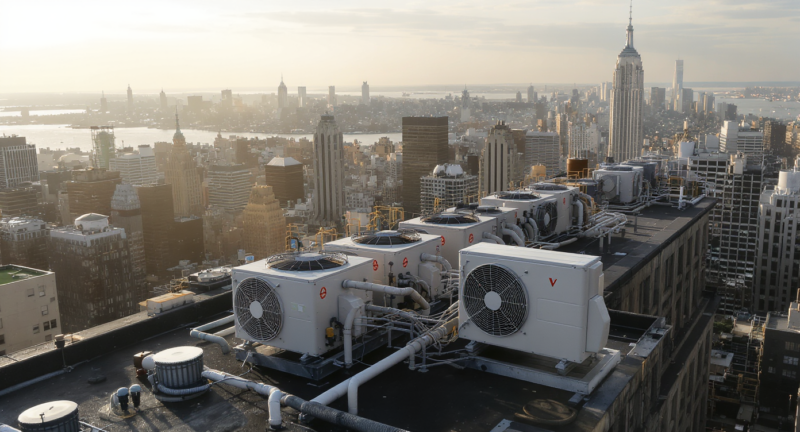
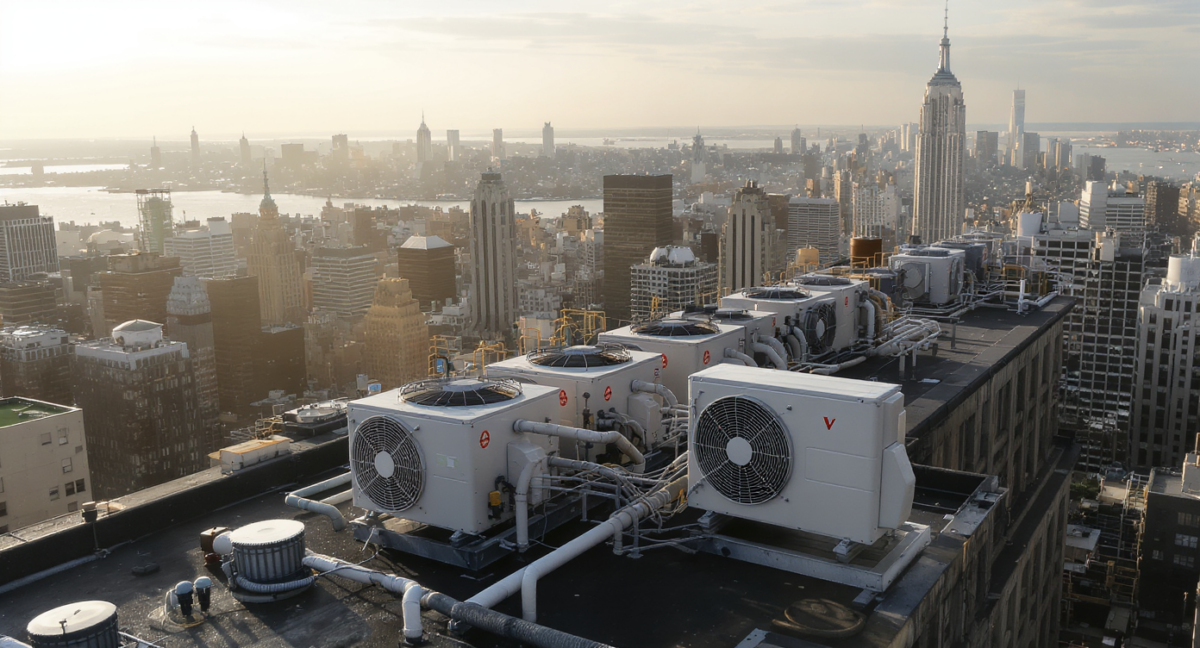
The major work is the refrigerant piping and the indoor unit installs, plus the roof condenser placement and the electrical. In a high-rise that means long vertical piping runs, careful attention to oil return and head pressure at elevation, and a crane plan for getting condensers to the roof. None of this is exotic for a contractor who works on tall NYC buildings regularly, but it is unforgiving if the design is wrong. Piping that is undersized or poorly routed will haunt the system for its entire life.
Realistic timelines depend on size and how aggressively you can take rooms offline. A focused conversion of a mid-size property can move quickly when the property can release a floor at a time. A property that can only give up a handful of rooms per week stretches the schedule but keeps revenue flowing. Either way, the planning and the brand-correct equipment selection matter more than raw crew size.
Worth doing the math on your property
For a lot of NYC hospitality properties, the question is no longer whether VRF makes sense but when the existing system forces the decision. If you are already swapping out failing PTACs every season, fielding comfort complaints, and watching your LL97 exposure grow, the conversion case tends to write itself.
Mountain Mechanical has been designing, installing, and servicing VRF systems in NYC buildings since they first showed up here, and hotels are some of the most demanding work we do. If you are weighing a conversion or just want a straight read on whether your building is a good candidate, give us a call at 833-504-HVAC.