VRF Refrigerant Leaks: How to Spot Them Before They Cost You
April 17, 2026
2026 LL97 Penalties: What NYC Building Owners Are Actually Paying
April 20, 2026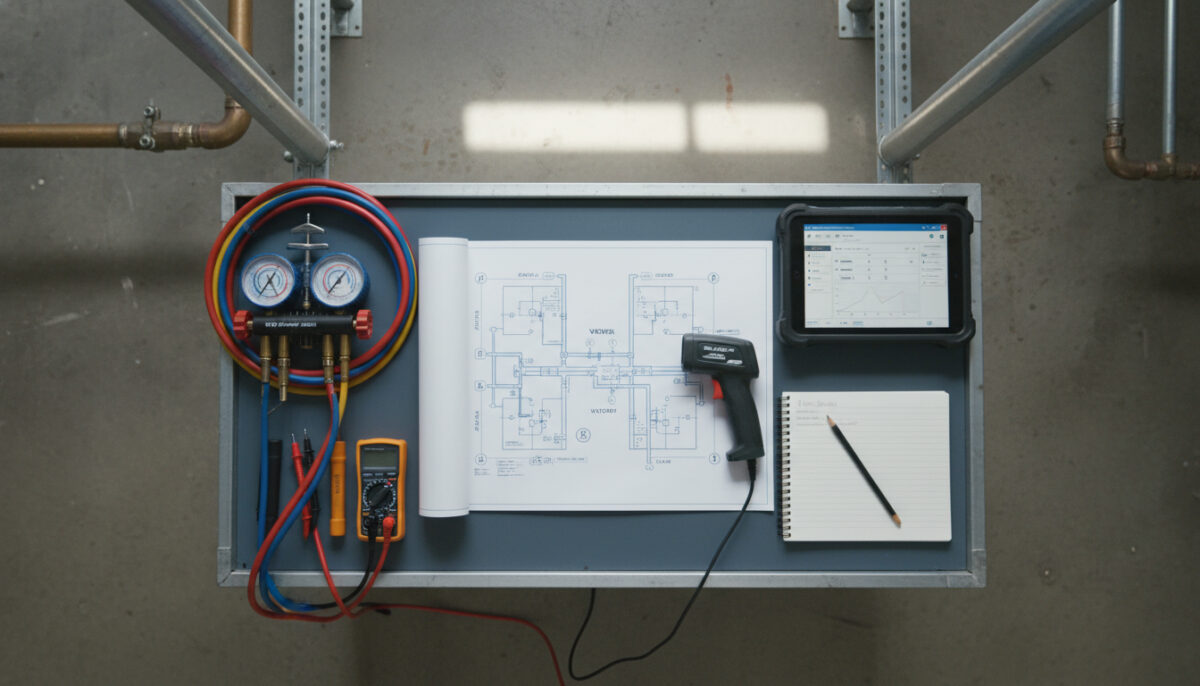
When a Daikin VRV system throws an A3 error in a 20-story building, you don’t have time to scroll through forums. That code points to a high-pressure cutout, and in a piping run that long, the cause is almost never what the manual says first.
Most Daikin VRV error codes tell you where the system stopped, not why it stopped. This guide covers the codes building engineers and supers see most often, what they actually mean, and when you need to call a contractor versus reset and monitor.
How Daikin VRV Error Codes Work
Daikin VRV systems display error codes on the outdoor unit’s LED panel and in the system controller. The format is typically two characters: a letter followed by a number. In multi-unit systems, the code also includes a unit address so you know which indoor unit triggered the fault.
Some codes are informational. Others shut the system down. A few indicate a failure that won’t clear without a technician and parts.
The codes below are what we see repeatedly on service calls across Manhattan and Brooklyn buildings. Not the full list, but the ones that actually matter day to day.
A3 and A6: High-Pressure and Low-Pressure Cutouts
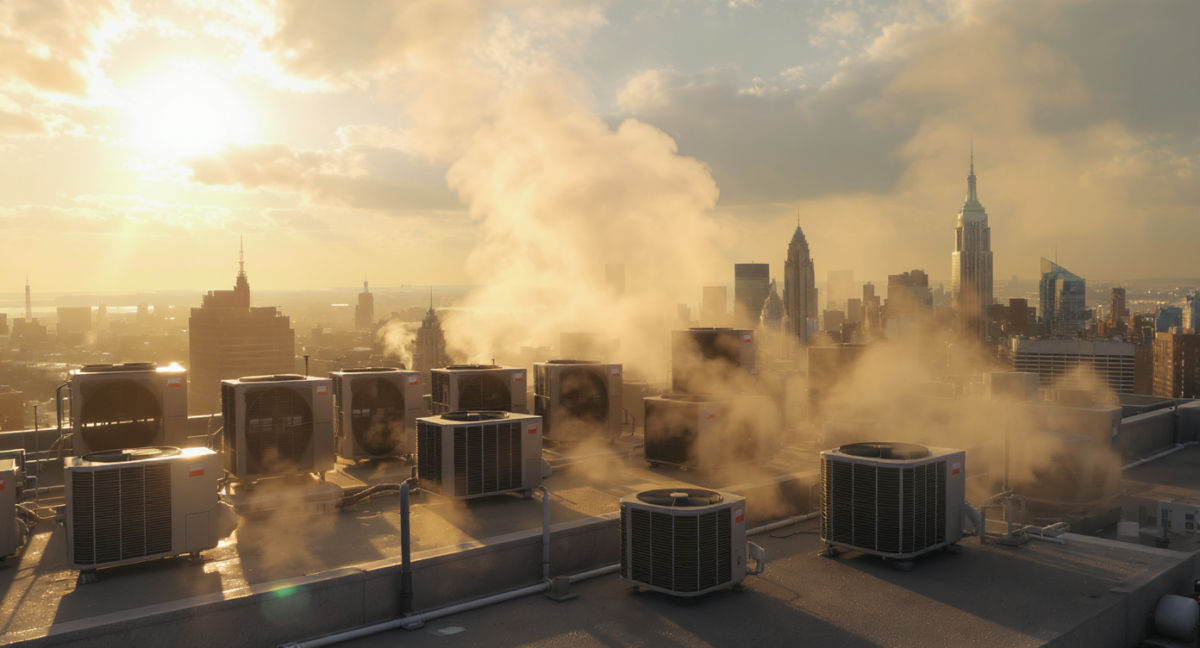
A3 and A6 are among the most common codes on older Daikin VRV installs in NYC high-rises. A3 stops the compressor because refrigerant pressure on the discharge side has exceeded safe limits. Common causes: dirty condenser coils, blocked airflow at the rooftop unit, refrigerant overcharge, or a stuck reversing valve. In taller buildings, vertical piping elevation adds static head pressure that compounds these issues.
A6 typically indicates refrigerant loss, a suction line restriction, or a faulty expansion valve. In a system with 300 or more feet of piping run, tracking down a refrigerant leak requires more than a quick visual inspection.
If the unit resets cleanly after clearing an A3 or A6 and doesn’t return within a week, monitor it. If the code comes back within 24 to 48 hours, you have an active problem and need a tech on site.
E7: Outdoor Fan Motor Fault
E7 indicates an outdoor fan motor fault. The system has detected that one or more fans on the condensing unit aren’t running as expected.
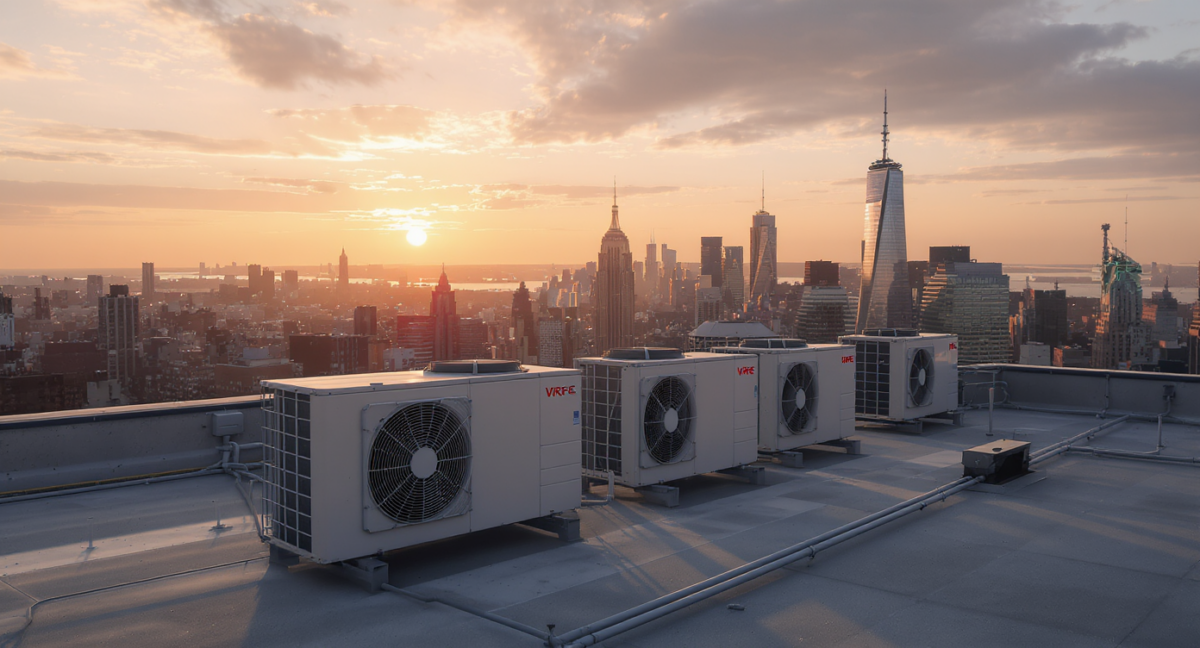
On rooftop installations in Manhattan, fan motors take a beating. Wind loads, debris, and temperature swings are harder on motors than the spec sheet accounts for. A motor that runs at startup but cuts out under load will trigger an E7.
First check: is the fan physically obstructed? Visible from the rooftop without opening the unit. If the fan is clear, the issue is usually a failed motor, a bad capacitor, or a control board fault. This one generally needs a technician.
Don’t ignore an E7 in summer. Condensing without a functioning fan will drive high-pressure faults and accelerate compressor wear.
U4: Communication Error
U4 is a communication error between the outdoor unit and one or more indoor units. It’s one of the more frustrating codes because it can be a wiring issue, a board issue, or simply a loose connection that makes the problem intermittent.
In older installations, the 2012 to 2016 vintage common in many Midtown and Upper West Side buildings, the indoor-outdoor communication wiring has had a decade of thermal cycling, rodents, and tenant renovations creating taps or splices. That’s usually where the U4 comes from.
A U4 that clears on reset and doesn’t return is often a transient communication drop. A U4 that comes back repeatedly requires tracing the control wiring, which is time-consuming in a large building but necessary. Board replacements are expensive. Don’t swap boards before ruling out the wiring.
L4 and L5: Heat Exchanger and Low-Pressure Protection
L4 indicates an abnormal temperature at the outdoor heat exchanger. It fires when the coil is reading temperatures outside the expected operating range during a defrost cycle or under heavy heating load.
L5 is related: it protects against low-pressure conditions during heating mode. If you’re seeing L5 codes during the heating season on systems that were fine last winter, suspect refrigerant loss.
Both codes are more common in systems where the refrigerant charge hasn’t been verified in several years. NYC systems that went into service around 2013 to 2015 are now at the age where refrigerant leaks are a predictable maintenance event, not an exception. These systems are entering the critical service window, and deferred maintenance tends to show up in the heating season first.
When to Reset vs. When to Call
A single code that clears on reset and doesn’t return in the next few days is usually safe to monitor. Log the date, the code, and the unit address so there’s a record if it comes back.
Call a contractor when:
- The same code returns within 48 hours of resetting
- Multiple units are faulting simultaneously
- You’re losing cooling or heating in occupied spaces
- The outdoor unit is making unusual noise before or after the fault
- You can’t identify the cause after a basic visual check
Resetting a code that points to refrigerant loss or a failing compressor doesn’t fix anything. It delays the repair and usually increases the final cost.
What Makes Daikin VRV Diagnostics Different in NYC High-Rises
Most Daikin service documentation is written for standard commercial installations. A 20-story building with 400 feet of vertical refrigerant piping and 50 or more indoor units is a different situation.
Long piping runs affect refrigerant distribution and pressure balance in ways the outdoor unit’s sensors don’t fully capture. An A3 code in a high-rise might originate with a condition three floors below the outdoor unit, triggered by something that wouldn’t show up in a low-rise building.
When Daikin installed VRV systems across Manhattan in the early 2010s, many buildings were among the first to run that configuration at scale. Mountain Mechanical has been servicing those systems since they were commissioned. The error codes are the same, but the diagnostic path is different.
If you’re dealing with a Daikin VRV error code on a building you manage and you’re not sure whether it warrants a service call, give us a ring at 833-504-HVAC. We’ll tell you what we know over the phone before rolling a truck.