Fujitsu Airstage Error Codes: A Field Reference for NYC Building Engineers
April 14, 2026
Daikin VRV Error Codes: What Building Engineers Need to Know
April 18, 2026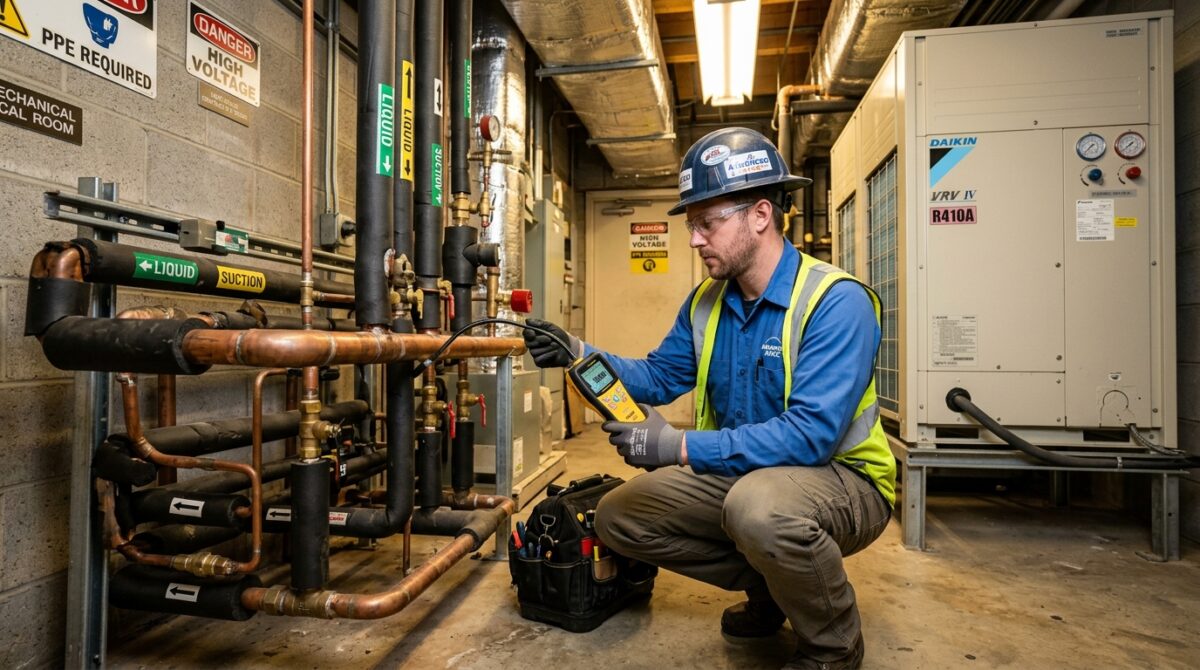
Refrigerant leak patterns and detection methods below apply to commercial heat pumps generally. VRF and commercial heat pump refer to the same class of equipment, and the R-410A phase-down plus R-454B transition affects both equally.
If you manage a building with a VRF system, refrigerant leaks are one of the most expensive problems you can ignore. By the time you notice the system isn’t keeping up, you could be down several pounds of R-410A at $50-75 per pound, and the compressor has been working overtime trying to compensate.
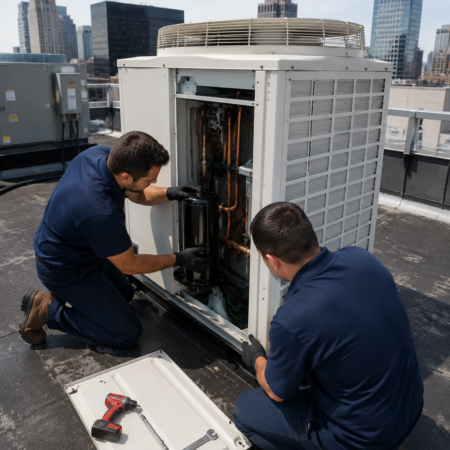
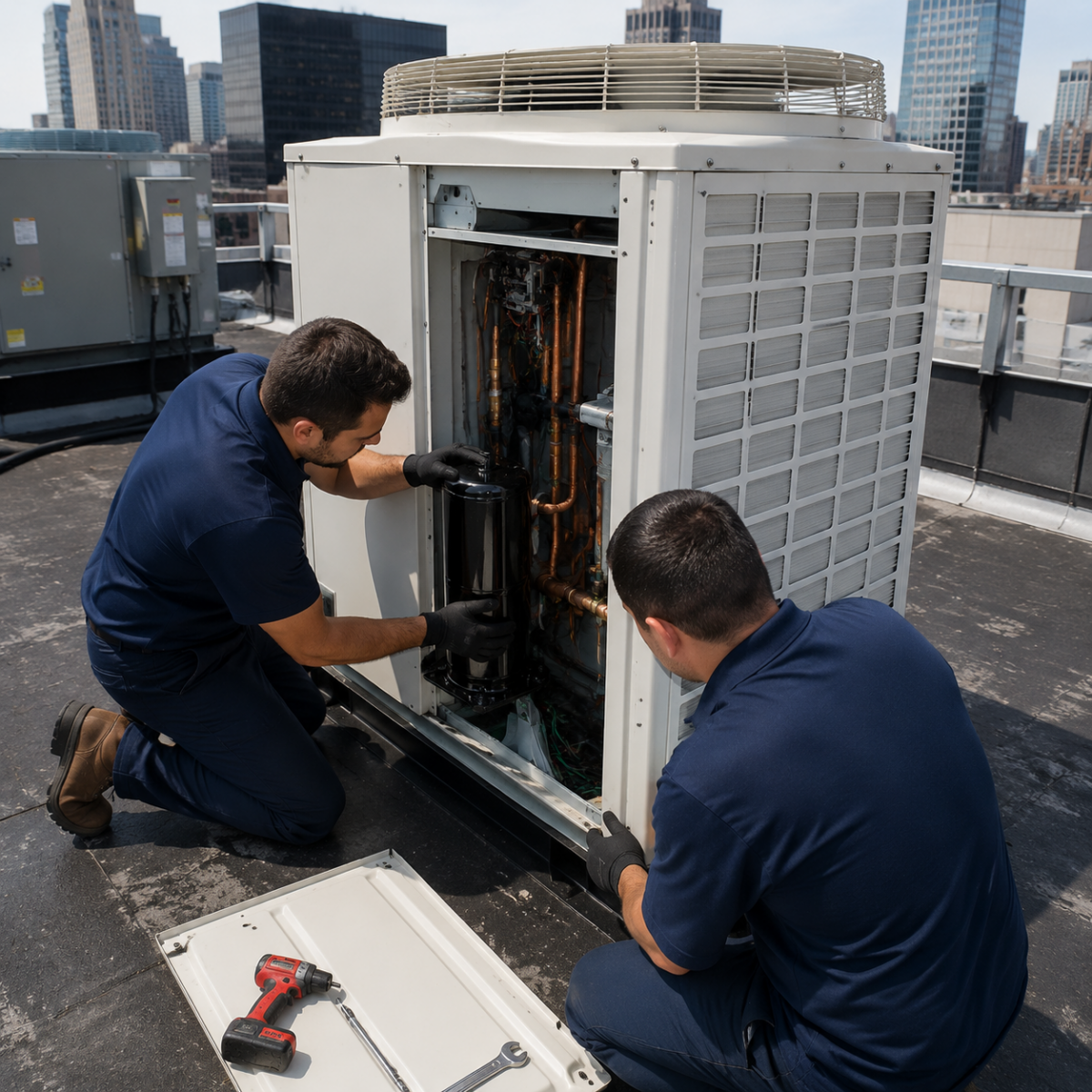
The tricky part with VRF is that these systems use significantly more refrigerant than a standard split system, often 30-50+ pounds depending on the number of indoor units and the length of the piping runs. A slow leak can go undetected for months, silently driving up energy costs and accelerating wear on the compressor.
Why VRF Systems Are Especially Prone to Leaks
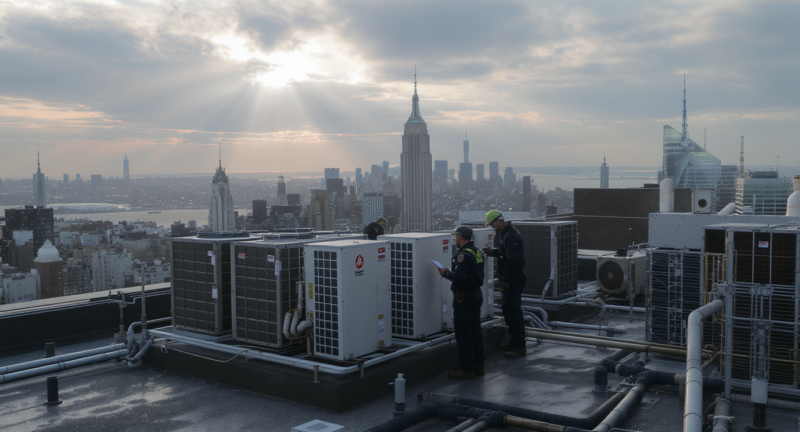
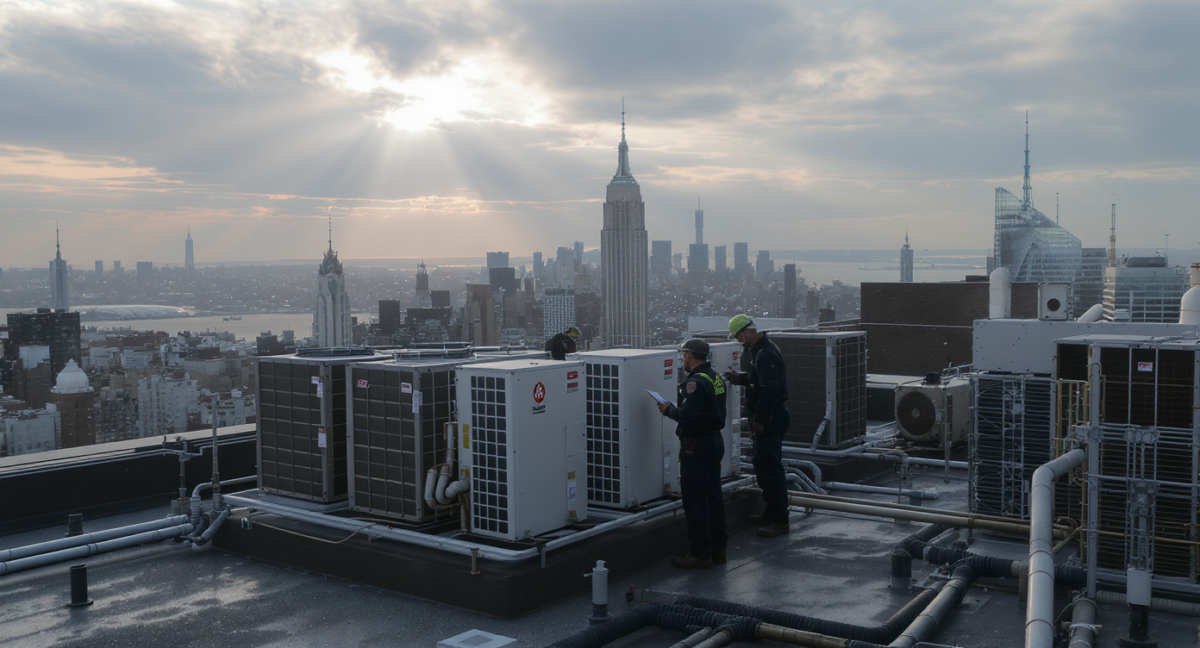
VRF piping runs in a Manhattan high-rise can easily exceed 500 feet from the outdoor condenser to the farthest indoor unit. Every brazed joint, every flare fitting, every branch controller connection is a potential leak point. In a typical 20-story building, you might have 80-120 joints in the refrigerant circuit. That’s 80-120 places where a leak can develop over time.
Add thermal cycling to the equation. These systems heat and cool on the same day during spring and fall shoulder seasons. The piping expands and contracts with every mode switch. After 10-12 years of that, joints that were perfect at commissioning start to weep.
Buildings from the 2012-2016 VRF installation wave are now right in this window. If your system was installed during that period, you should be watching for the signs below.
The Early Warning Signs
The first thing most supers notice is comfort complaints. Zones that used to hold setpoint are now running 2-3 degrees off. The system is working, it’s just not performing at capacity. That loss of capacity is often the first symptom of low refrigerant charge.
Next comes increased runtime. The outdoor unit is running longer cycles or failing to cycle off entirely. If you have BMS trending, pull the compressor run hours and compare them to the same period last year. A 15-20% increase with no change in occupancy or weather is a red flag.
Error codes are another telltale. On Daikin VRV systems, watch for E1 (high pressure) and E3 (low pressure) faults. Mitsubishi City Multi will throw a 4250 or 1102 when refrigerant gets low enough. These codes don’t always mean a leak, but when they start appearing alongside comfort complaints, the picture gets clear fast.
The most obvious sign is ice formation on the outdoor unit’s service valves or suction line. If you see frost where there shouldn’t be frost, you’re already well below normal charge levels.
Slow Leaks vs. Catastrophic Failures
Most VRF refrigerant leaks are slow. A pinhole at a brazed joint might lose a fraction of an ounce per day. You won’t hear it. You won’t smell it. You’ll just see gradual performance degradation over weeks or months.
Catastrophic leaks are rarer but they happen. A vibration crack in a branch controller, a fitting that fails at a penetration point, or corrosion on a rooftop condenser coil. When a large volume of refrigerant escapes quickly, you’ll know it immediately because the system shuts down on low-pressure safety. The bigger concern with catastrophic leaks in occupied spaces is the oxygen displacement risk in small mechanical rooms.
Both types require professional leak detection. The days of soap bubbles and guesswork don’t apply to VRF. A proper leak search on a large system involves electronic detection, nitrogen pressure testing, and sometimes ultrasonic equipment to pinpoint the exact location.
What a Refrigerant Leak Actually Costs
The refrigerant itself is the easy number. R-410A runs $50-75 per pound depending on market conditions, and a large VRF system might need 15-25 pounds to get back to normal charge. That’s $750-1,875 just for the gas.
But the real cost is in the labor and the damage that accumulates before the leak is found. A leak search on a complex VRF system in a high-rise can take 8-16 hours of technician time. If the leak is behind a wall or above a ceiling in a tenant space, add demolition and restoration costs.
The hidden cost is compressor damage. Running a VRF compressor on low charge generates excessive heat and starves it of the oil that circulates with the refrigerant. We’ve seen buildings that ignored leak symptoms for 6 months end up replacing a $12,000-18,000 compressor that could have been saved with a $2,000 repair.
And in NYC, there’s a compliance angle too. Local Law 97 penalties are based on carbon emissions. A system running inefficiently because of low refrigerant charge burns more energy and pushes your building closer to the penalty threshold.
What You Should Be Doing Now
If your VRF system is 8 years old or older, you should have a refrigerant circuit inspection as part of your annual maintenance. Not just a pressure check, but a proper leak survey. Many building managers skip this because the system “seems fine.” By the time it doesn’t seem fine, you’ve lost hundreds or thousands of dollars in refrigerant and efficiency.
Talk to your service contractor about trending superheat and subcooling values at every PM visit. These are the early indicators that tell you charge is dropping before the error codes show up. If your contractor isn’t logging these values, that’s a conversation worth having.
Mountain Mechanical has been servicing VRF systems across Manhattan since the first major installations went in. If you’re seeing any of the signs above, or if your system is in that 10-14 year window and hasn’t had a comprehensive leak survey, give us a call at 833-504-HVAC. Finding a leak early is always cheaper than finding it late.