Fujitsu Airstage VRF: Common Problems and Solutions for NYC Buildings
May 22, 2026
NYC Energy Benchmarking and Your HVAC System: What the Numbers Are Telling You
May 29, 2026
If you’ve ever put a VRF service contract out to bid, you already know the problem. Three proposals come back, all titled “VRF Maintenance Agreement,” all priced within shouting distance of each other, and all describing wildly different scopes of work. One vendor is doing eight visits a year with leak surveys and controls calibration. Another is doing two filter changes and a windshield-time coil rinse. From the cover page, they look interchangeable.
For a commercial VRF system in Manhattan, the difference between those two contracts is the difference between catching a slow refrigerant leak in February and replacing a compressor in July. So before you sign anything, here’s what a serious VRF service contract should actually include, and how to read between the lines on a proposal that’s trying to look full while staying cheap.
Why a Generic PM Contract Doesn’t Cover VRF
Most boilerplate commercial HVAC maintenance contracts were written for split systems, rooftop packaged units, and chillers. The language gets recycled when a contractor inherits a VRF building, and the scope rarely catches up.
VRF systems behave differently. Long refrigerant piping runs in a high-rise mean small leaks take months to show up as performance loss, and by then you’ve often lost enough charge to damage a compressor. Inverter-driven compressors run continuously at modulated speeds rather than cycling on and off, so wear patterns and failure signals don’t match what most techs grew up troubleshooting. Controls integrations with BMS platforms drift over time, and zones go out of calibration without anyone noticing until tenants start complaining.
A generic PM contract that promises “filter changes and visual inspection” twice a year isn’t maintenance on a VRF system. It’s a billing cycle.
What a Real VRF Service Contract Should Cover
A proper agreement should be specific about scope, frequency, and what’s included versus what’s billed extra. The categories below are the floor, not the ceiling.
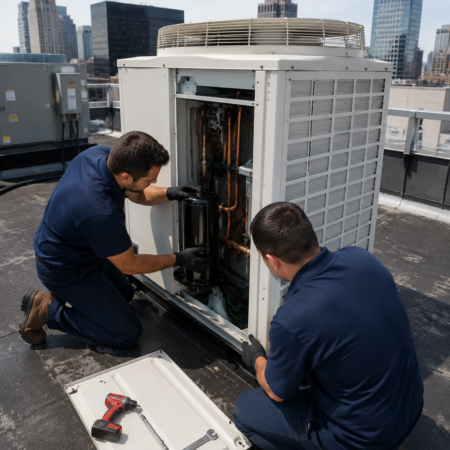
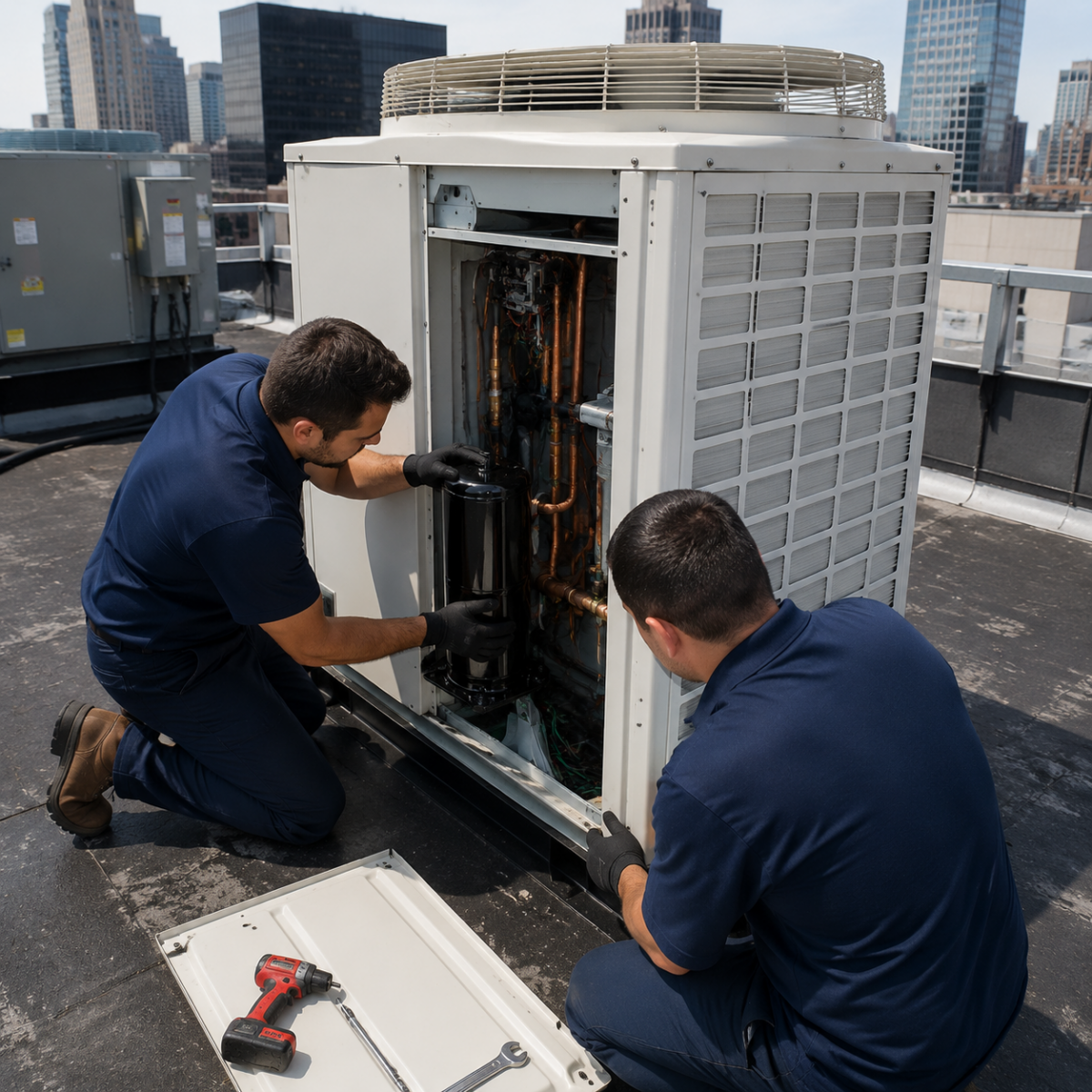
Filter and coil work. Indoor unit filters cleaned or replaced quarterly at minimum, more often in restaurant or retail spaces. Indoor coil inspection annually with cleaning as needed. Outdoor condenser coils washed at least once per cooling season, twice in dirtier rooftop environments. On older systems we often catch fin damage and corrosion that nobody noticed because the units sit out of sight on a setback.
Refrigerant and leak management. This is where most contracts fall apart. The agreement should specify electronic leak detection on a defined cadence, not just a sniff test if someone happens to be on site. For systems past the seven or eight year mark, an annual electronic leak survey of all accessible joints and headers is the standard we’d want to see. The contract should also state who pays for refrigerant if a leak is found, because R-410A and R-32 pricing has been volatile enough that an ambiguous clause can cost a building tens of thousands.
Compressor and electrical inspection. Megohm testing of compressor windings, inspection of contactors and start components, infrared scans of disconnects and electrical panels. On VRF systems with multiple condensers in a manifolded configuration, this matters more than people realize. One degraded contactor can take down a whole module.
Controls and BMS verification. Calibration of zone sensors, verification of setpoints against design intent, confirmation that BACnet or Modbus points are still mapping correctly to the building management system. A surprising number of comfort complaints in newer Class A buildings trace back to control drift that nobody is checking for.
Drainage and condensate. Indoor unit pans, traps, and drain lines flushed and treated. In high-rise buildings, a single clogged condensate line can flood a tenant space and turn a $400 cleaning into a $40,000 claim.
Oil management. Long vertical refrigerant runs cause oil return issues that are unique to VRF. The contract should reference oil level checks and verification that any oil equalization piping is functioning as designed.
Documented reporting. After every visit, the building should receive a written report listing what was inspected, what was found, what was corrected, and what’s flagged for follow-up. If you can’t tell from the paperwork whether the tech actually opened the panel, the inspection didn’t happen.
Emergency Response and Response Time
The maintenance scope is half the contract. The emergency response language is the other half, and it’s where contractors quietly hedge.
Look for a defined response time, in hours, with separate language for business hours versus after hours. “Same day response” is meaningless if the same-day window ends at 5 p.m. and your tenants are calling at 6. For occupied commercial buildings, the contract should commit to a four-hour response window for critical failures during business hours, and a defined after-hours commitment, typically eight to twelve hours depending on the priority tier.
Also look at what counts as covered emergency labor versus what gets billed at a premium rate. Some contracts include a set number of emergency hours per year. Others bill every after-hours call from the moment the truck rolls. Both can be reasonable, but you need to know which one you signed up for before the first July heatwave.
How to Evaluate Competing Proposals
When you get three bids back, line them up against each other on five points before you look at price.
How many visits per year, and what’s done on each visit. A four-visit contract that includes a refrigerant survey and a coil wash is not comparable to a two-visit contract that doesn’t.
Whether refrigerant, filters, belts, and minor consumables are included or billed separately. This single line item can swing the real annual cost by 20 to 40 percent.
What the emergency response commitment actually says, in writing, with response times by tier.
What the renewal and escalation language looks like. Some contracts auto-escalate at CPI plus a percentage, which can stack quickly over a three-year term.
What experience the contractor has with your specific VRF brand. A tech who’s spent ten years on Daikin VRV is going to read a P0 fault differently than someone who’s mostly worked on Mitsubishi. Brand-specific factory training matters more on VRF than on almost any other commercial system.
If a proposal can’t answer those five questions in plain English, the gap usually shows up later, either in service quality or in change orders.
The Aging Install Wedge
One more thing worth noting for any building with a VRF system installed between 2012 and 2016. Those systems are now 10 to 14 years old, which is right in the window where compressor failures, refrigerant losses, and controls obsolescence start stacking up. A service contract written for a brand-new system is the wrong contract for a system in that window. At that age, leak surveys should be more frequent, controls verification matters more, and the agreement should account for the realistic possibility of major component replacement during the term.
If you’re evaluating service contract proposals on an aging VRF system, or you’re seeing service quality slip on an existing agreement, give us a call at 833-504-HVAC. Mountain Mechanical has been servicing these systems across Manhattan since they were first installed, and we can tell you in five minutes whether the contract you’re being pitched is going to actually protect the building.