LG Multi V Service in Manhattan: What Building Managers Should Know
May 5, 2026
The Real Cost of VRF Compressor Replacement in NYC
May 12, 2026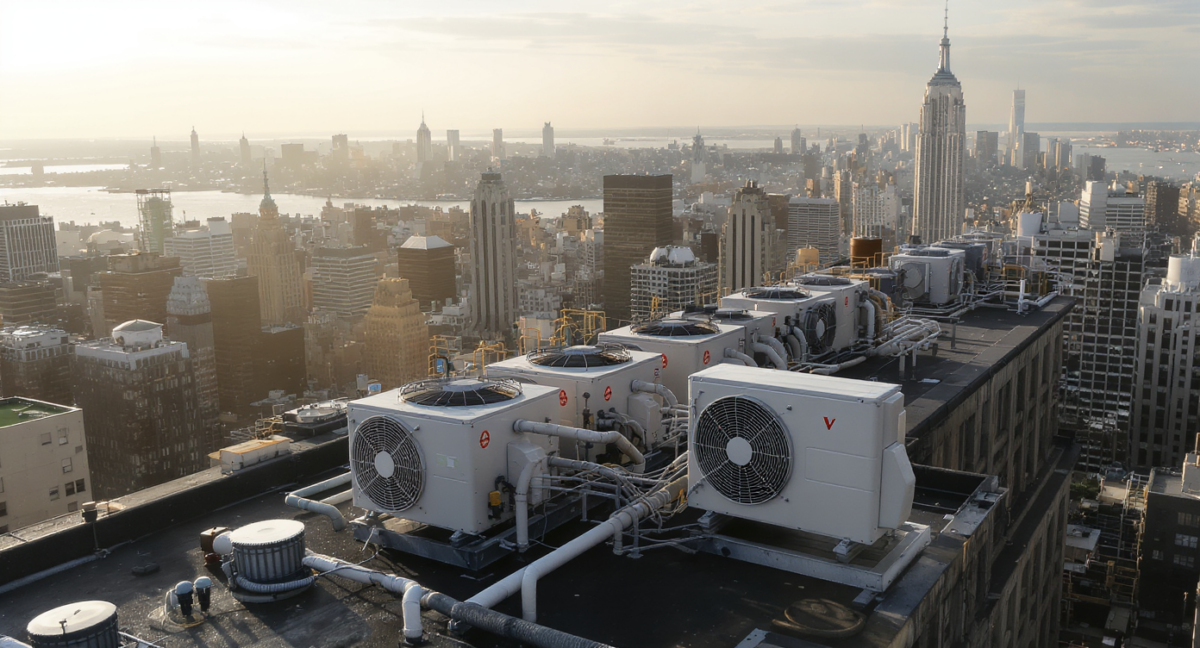
Designing or servicing a VRF system in a 30-story Manhattan tower is a different job than putting one in a low-rise mixed-use building. The physics changes. The logistics change. And almost every assumption that works at four stories breaks somewhere around the twentieth floor. That is the part nobody warns you about until the system has been running for a few years and odd things start happening.
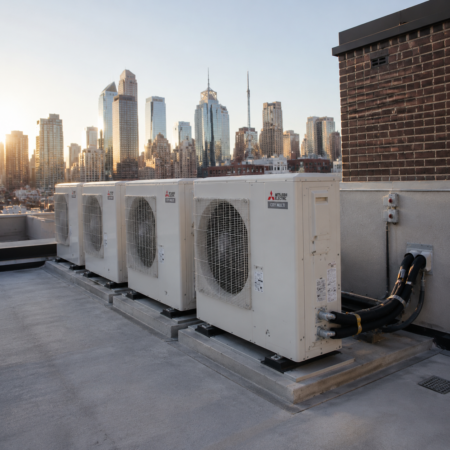
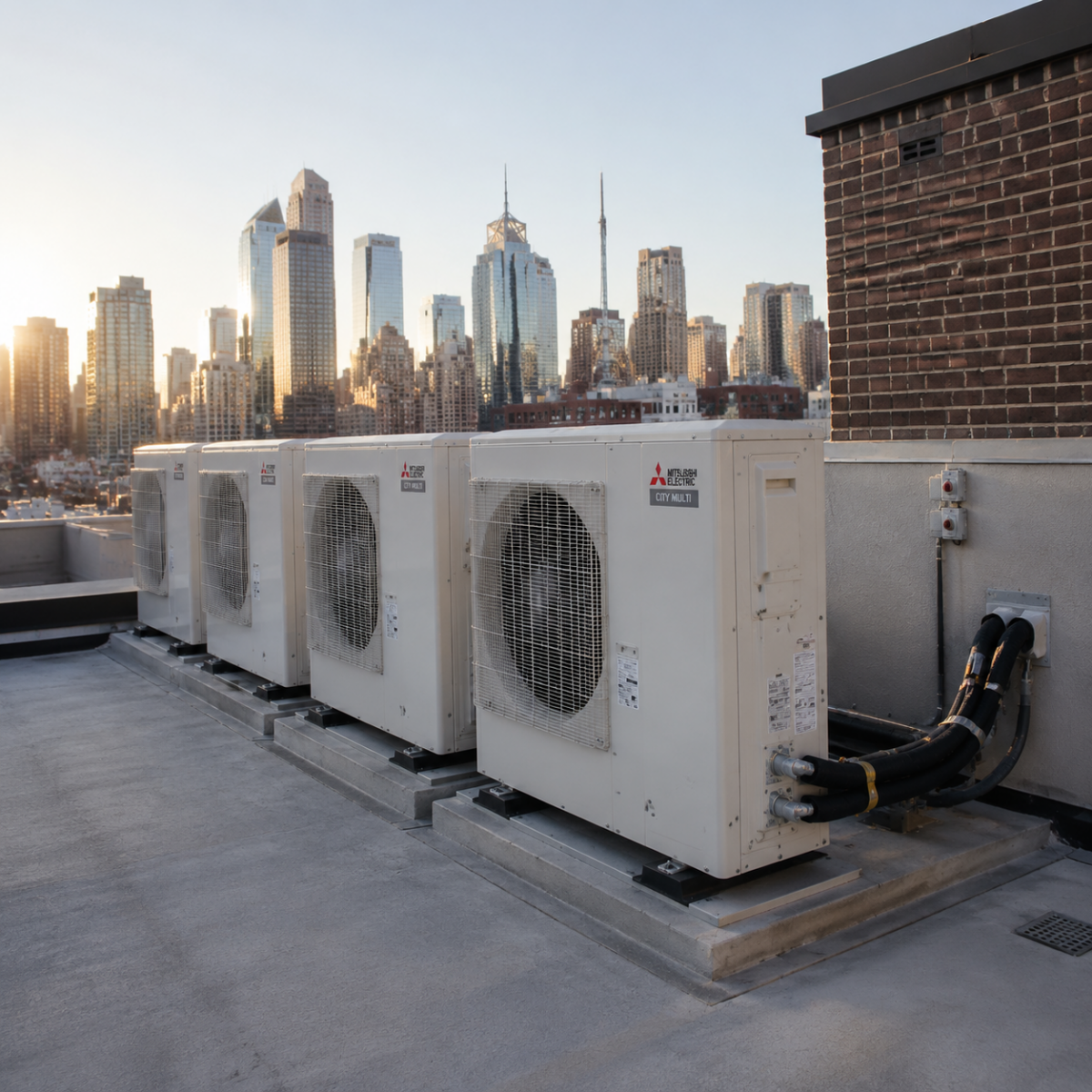
We’ve been servicing VRF in NYC high-rises since the early Daikin VRV and Mitsubishi City Multi installs went in. Below are the issues that come up repeatedly, and what building managers and engineers should know before they sign off on a new install or push through a replacement.
Long refrigerant piping runs change everything
Manufacturers publish maximum equivalent piping lengths, but those numbers assume reasonable conditions. In a tall building, a single condensing unit on the roof can be feeding indoor units 250 to 500 feet below it, with multiple branch boxes along the way. The longer the run, the more pressure drop, the more refrigerant charge, and the more sensitive the system gets to small mistakes during install.
What we see in the field is systems that technically met manufacturer specs at install but never quite performed as designed. Capacity falls off in the units furthest from the condenser. Comfort complaints concentrate on certain floors. Diagnostics get tricky because the symptom is performance loss rather than a hard fault.
If you’re spec’ing a new system, push the design team to model actual piping lengths against the manufacturer’s correction tables, not just the published maximums. If you’re inheriting an existing system that underperforms in certain zones, that imbalance often traces back to piping decisions made a decade ago.
Oil return is not optional, it is the whole game
Compressors need oil to survive. In a vertical piping run that climbs 200 feet or more, the oil has to travel back up to the compressor against gravity. The system relies on refrigerant velocity to carry that oil. When velocity drops, oil gets trapped in the piping, and the compressor starves.
This is why every VRF manufacturer has detailed rules about pipe sizing, oil traps at specific intervals, and minimum operating capacity. Skip a trap, oversize a pipe to “future-proof” the system, or run the system at low load for extended periods, and you will eventually take out a compressor. Compressor replacement on a rooftop unit in Manhattan is a six-figure problem on most buildings, before you even talk about the lost revenue from a building running half-cooled.
For older systems, oil return problems often show up as intermittent compressor faults, oil level alarms on systems that have them, or unexplained capacity loss after a long shoulder season where the system was running mostly part-load. If your service tech isn’t checking oil traps and looking at run patterns when these symptoms appear, you’re getting a half-diagnosis.
Head pressure at elevation
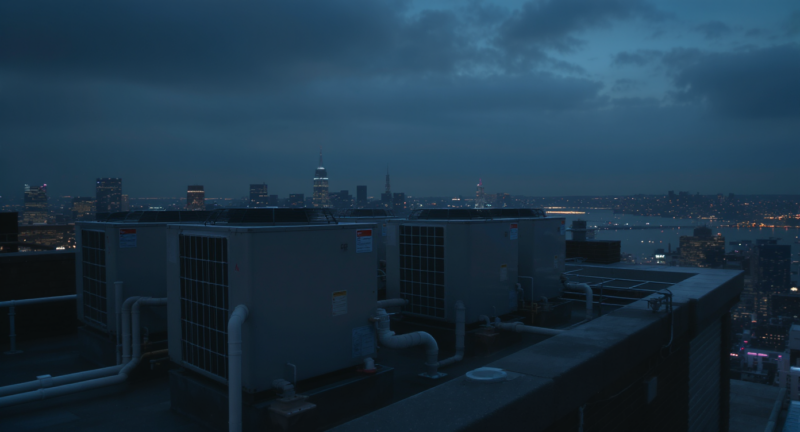
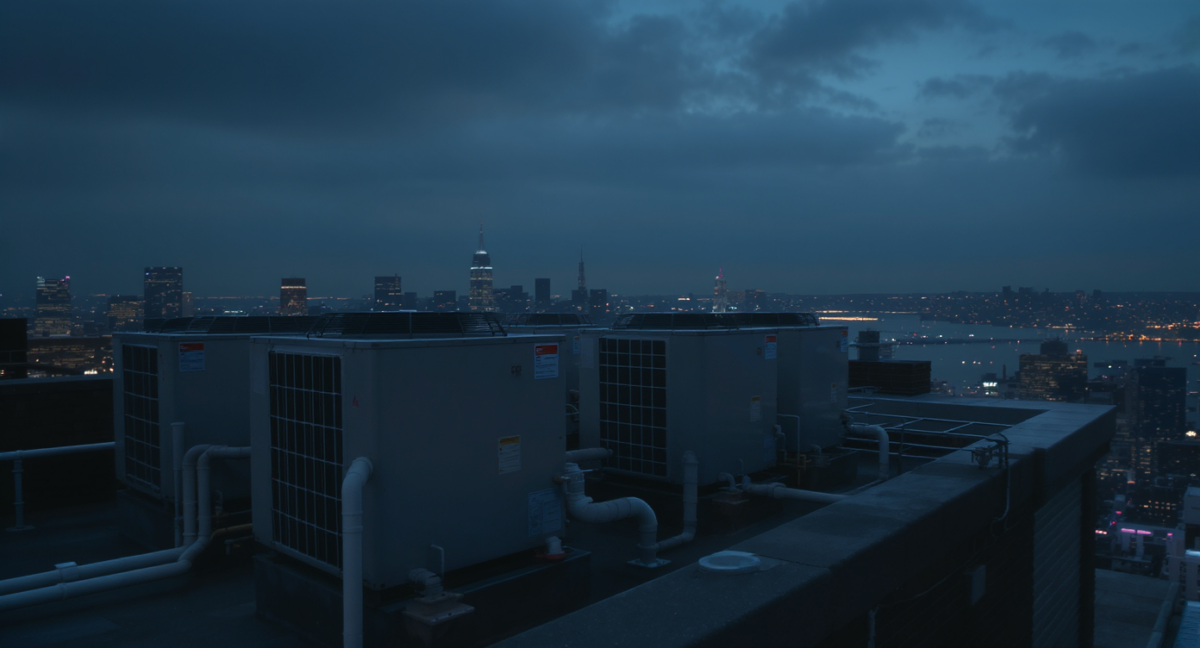
Air-cooled condensers reject heat to whatever air is around them. On a 40-story rooftop in July, the air is hot, the wind is moving, and the unit is fighting both. In winter, the wind chill can drop coil temperatures below what the system was designed for, and head pressure crashes. Either extreme creates issues that low-rise buildings rarely see.
We’ve worked on Midtown towers where rooftop condensers were essentially fine in spring and fall and miserable in peak summer or peak winter. The fix isn’t always replacing the unit. Sometimes it’s wind baffles, repositioning, controls adjustments, or in rare cases switching strategy on certain floors. But you have to identify the pattern first, and that takes someone who has actually worked on enough rooftop installs to recognize what they’re seeing.
Getting equipment to and from the roof
The day-one install is one logistics problem. The day a 12-ton condenser fails ten years later is a different one. By then the construction crane is long gone, the building is fully occupied, and the freight elevator is rated for office furniture, not 4,000-pound mechanical equipment.
The realistic options on most NYC high-rises are crane lifts (often street-permit dependent and weather-sensitive) or component swaps where the failed unit is broken down on the roof and rebuilt with new internals. Both are expensive. Both require coordinating with property management, building staff, traffic, and sometimes the FDNY. We’ve seen replacements that took six weeks of planning for a four-day execution.
For new installs, it’s worth asking what the replacement plan looks like before signing off on the equipment selection. Some buildings are better served by smaller modular units that can be swapped through the freight elevator over a weekend than by a single large unit that requires a crane every time something fails.
Controls and zoning across stacked tenants
VRF’s biggest selling point in commercial buildings is zone-level control. In a high-rise with stacked tenants, that promise gets complicated fast. Office tenants on the south face want cooling year-round. North-facing zones are calling for heat at the same time. A heat-recovery system can handle this efficiently, a basic heat-pump system cannot.
If you’re managing a building with mixed simultaneous loads and a heat-pump-only VRF system, you’re either fighting comfort complaints or burning energy. The decision to spec heat recovery should happen at design, but for buildings already running heat-pump systems, the answer often involves controls upgrades and BMS integration rather than equipment replacement.
Service planning is different at 30 stories
A normal commercial PM contract assumes the tech can get to the equipment. In high-rises, equipment is on the roof, in mechanical rooms scattered across multiple floors, in shafts, above ceilings, and behind tenant spaces. Coordinating access alone can eat half a service visit.
The contracts that work for high-rise VRF have access protocols built in, scheduled tenant-side coordination, and clear escalation paths when an issue cuts across landlord and tenant responsibilities. If your current service agreement is the same template the contractor uses on a strip mall, it isn’t matching the building you actually have.
The bottom line for building managers
VRF works beautifully in high-rises when the design accounts for the physics, the install crew respects the manufacturer rules, and the service plan is built for the building’s actual layout. When any of those break down, the symptoms are slow to appear and expensive to chase down later.
Mountain Mechanical has been working on Manhattan and outer-borough high-rise VRF since the first wave of installs went in. If you’re managing a building where something feels off, or you’re heading into a major service event and want a second set of eyes, give us a call at 833-504-HVAC.