
Why Manhattan Buildings Are Choosing VRF Over Central Air
April 3, 2026
Mitsubishi City Multi Error Codes: A Building Engineer’s Reference Guide
April 10, 2026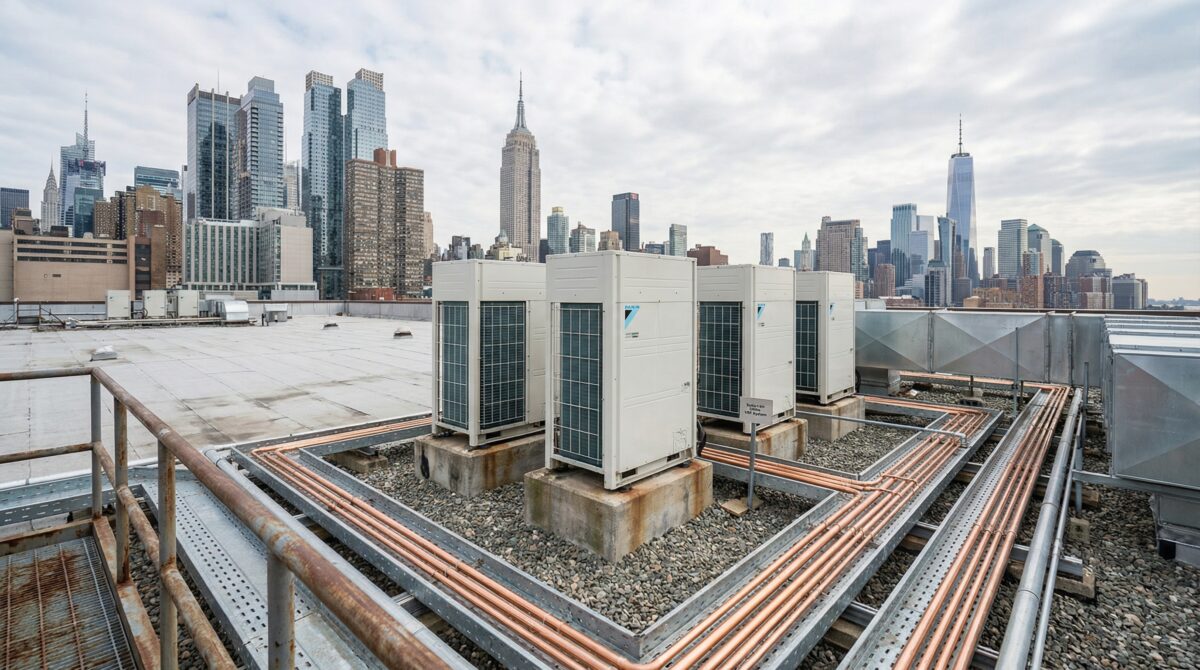
The failure patterns described below apply to commercial heat pumps broadly — VRF is the industry term for the commercial heat pump systems installed across Manhattan over the last 15 years. Owners encountering these issues on aging systems should consider factory-certified diagnostics before committing to a full replacement.
The Wave Nobody Planned For
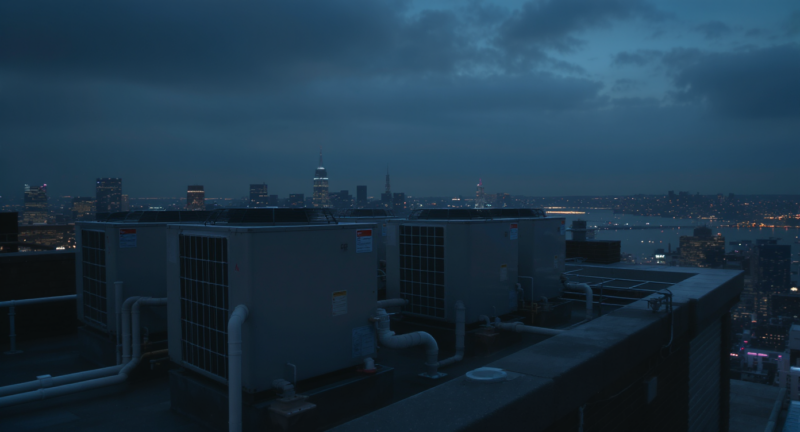
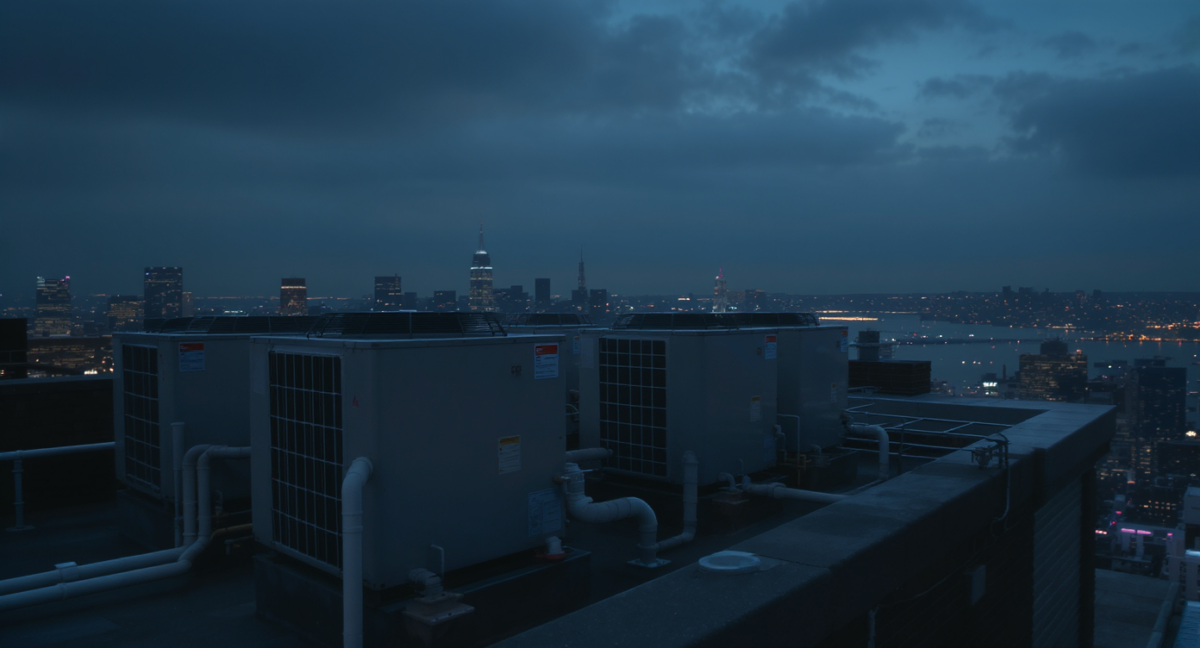
Between 2012 and 2016, Manhattan went through a VRF installation boom. Developers, building owners, and mechanical engineers fell in love with the technology for good reason. Variable refrigerant flow systems offered individual zone control, smaller footprints, and energy efficiency numbers that traditional systems couldn’t touch. Thousands of units went into high-rises, luxury condos, mixed-use buildings, and Class A office towers across Midtown, the Upper West Side, Chelsea, and downtown Brooklyn.
Those systems are now 10 to 14 years old. And they’re starting to fail.
If you manage or own a building with VRF, you’re either already seeing problems or you’re about to. Here’s what’s happening and what you should be thinking about now.
Why the 10-Year Mark Matters for VRF
Most VRF manufacturers design compressor life around 12 to 15 years under ideal conditions. But “ideal conditions” and “Manhattan commercial building” don’t usually belong in the same sentence. Long refrigerant piping runs in high-rise installations, rooftop condensers exposed to salt air and urban debris, and buildings that push cooling loads 10 months out of the year all accelerate wear.
The first thing to go is usually refrigerant integrity. Brazed joints in long vertical piping runs develop micro-leaks over time, especially in buildings where the piping was routed through shafts with thermal cycling. Slow refrigerant loss means the system works harder, compressor temperatures climb, and efficiency drops long before anyone notices a comfort problem.
By the time a tenant complains that their floor isn’t cooling, the system has often been running degraded for months.
Common Failure Points by Brand
We service all five major VRF brands across Manhattan, and each one has its own patterns at this age.
Daikin VRV systems from this era are showing compressor oil return issues, particularly in buildings with piping runs over 300 feet. The inverter boards on early VRV III and IV models are also reaching end of life, and replacement boards aren’t always a quick order.
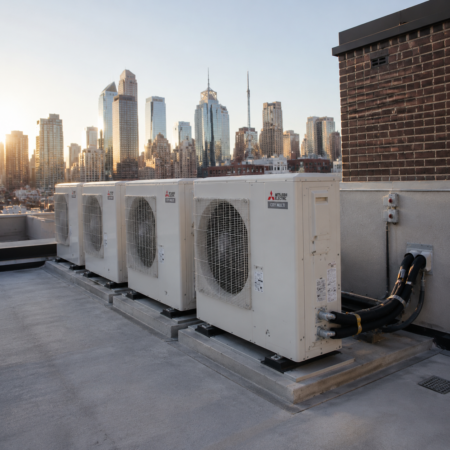
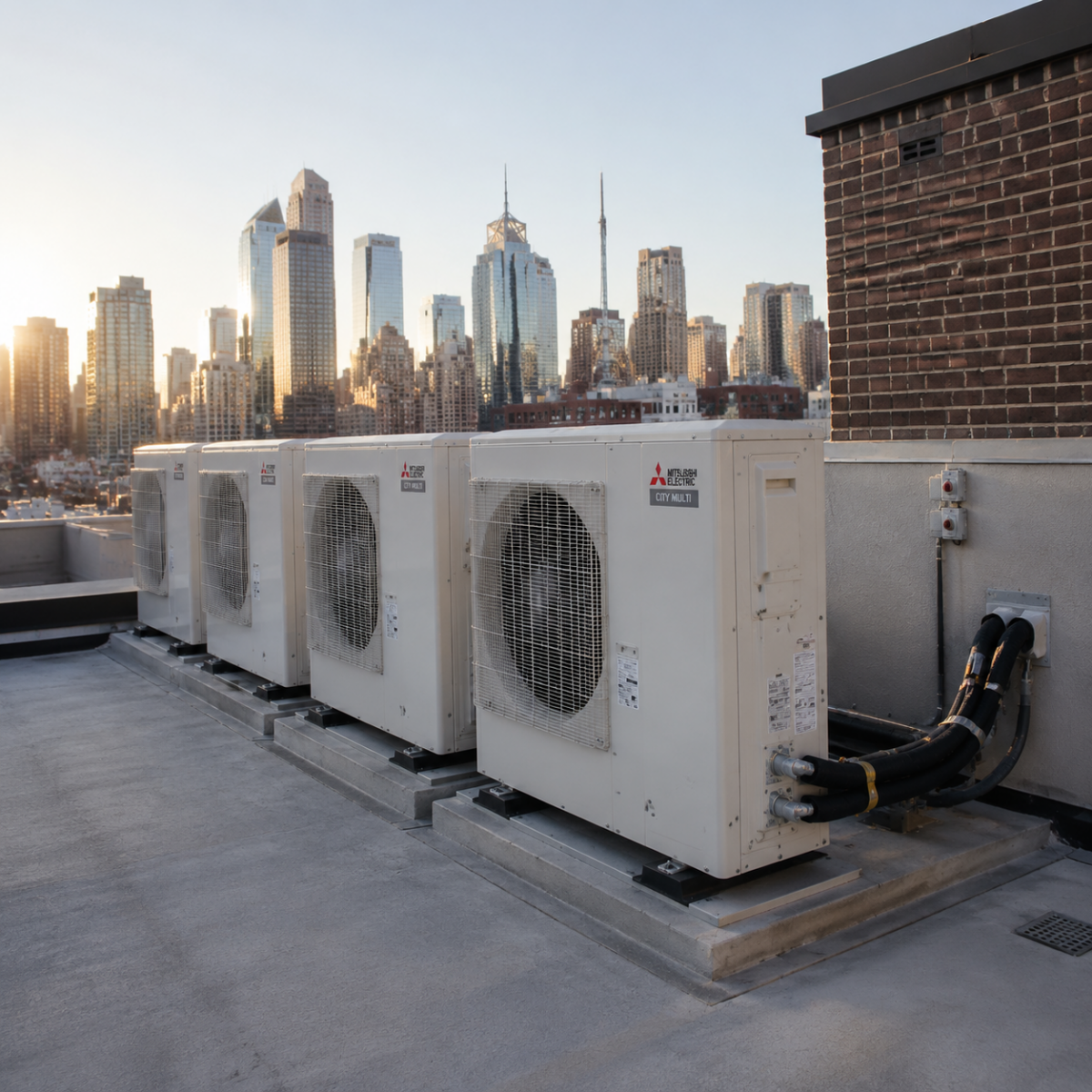
Mitsubishi City Multi units in luxury condo buildings are developing refrigerant leak patterns at branch circuit joints. The BC controllers on systems from 2013 to 2015 have a known failure rate that Mitsubishi has quietly acknowledged through updated parts.
LG Multi V systems, which gained significant market share in newer commercial installs, are starting to show heat exchanger corrosion on rooftop condensers. Parts availability for early Multi V models has become a real issue in the last year.
Fujitsu Airstage systems have a smaller install base in Manhattan, but the ones we see are hitting compressor failures earlier than expected, often tied to undersized piping from the original install.
Samsung DVM systems are the newest of the bunch, but even the early DVM S units from 2014 and 2015 are showing control board issues and communication faults between indoor and outdoor units.
What Building Managers Are Seeing Right Now
The calls we’re getting follow a predictable pattern. A building runs fine through winter, then the first real cooling day in May or June exposes every weakness the system has been hiding. Compressors that were borderline fail under full load. Refrigerant levels that were “close enough” in heating mode become critically low when the system switches to cooling.
The most common symptoms we’re seeing across Manhattan buildings right now include rising energy costs with no change in occupancy or setpoints, zones that can’t reach temperature even on moderate days, error codes that clear after a reset but keep coming back, and outdoor units cycling on and off more frequently than they should.
If any of that sounds familiar, it’s not a coincidence. It’s the age of your system catching up.
The Repair vs. Replace Conversation
This is where it gets expensive. A single VRF compressor replacement in a Manhattan high-rise can run $15,000 to $35,000 depending on the brand, refrigerant charge, and whether crane access is needed for the rooftop unit. If you’re looking at multiple compressors on the same system, the math changes fast.
The general rule we use: if repair costs are approaching 50 to 60 percent of replacement cost, and the system is over 10 years old, it’s time to start planning for replacement rather than sinking more money into aging equipment. That doesn’t mean you replace tomorrow, but it means you should be budgeting for it and getting quotes now rather than in the middle of a July heat wave when every contractor in the city is booked.
For buildings subject to Local Law 97 carbon emissions limits, there’s another factor. Older VRF systems running on R-410A with degraded efficiency may be pushing your building closer to the 2030 penalty thresholds. A system replacement now can be positioned as both a maintenance decision and a compliance investment.
What You Should Do Now
If your building has VRF systems installed between 2012 and 2016, get a comprehensive system assessment done before cooling season hits. Not a basic PM visit where someone changes filters and checks refrigerant pressure. A real assessment that includes refrigerant leak testing on the full piping system, compressor amp draw and oil analysis, controls diagnostics and error code history review, and condenser coil and heat exchanger inspection.
The buildings that handle this transition well are the ones that plan for it. The ones that get hurt are the ones that wait for a catastrophic failure in August and then scramble to find a contractor who can respond.
Mountain Mechanical has been servicing these systems across Manhattan since they were first installed. We know what’s coming because we’ve been watching it develop for the last three years. If you want an honest assessment of where your VRF system stands, give us a call at 833-504-HVAC.
Take the next step: VRF Diagnostics | VRF Maintenance Manhattan | VRF Replacement Manhattan | Contact Mountain Mechanical