Why VRF Systems Are Failing Across Manhattan Right Now
April 8, 2026
LG Multi V Error Codes: A Field Guide for NYC Building Engineers
April 14, 2026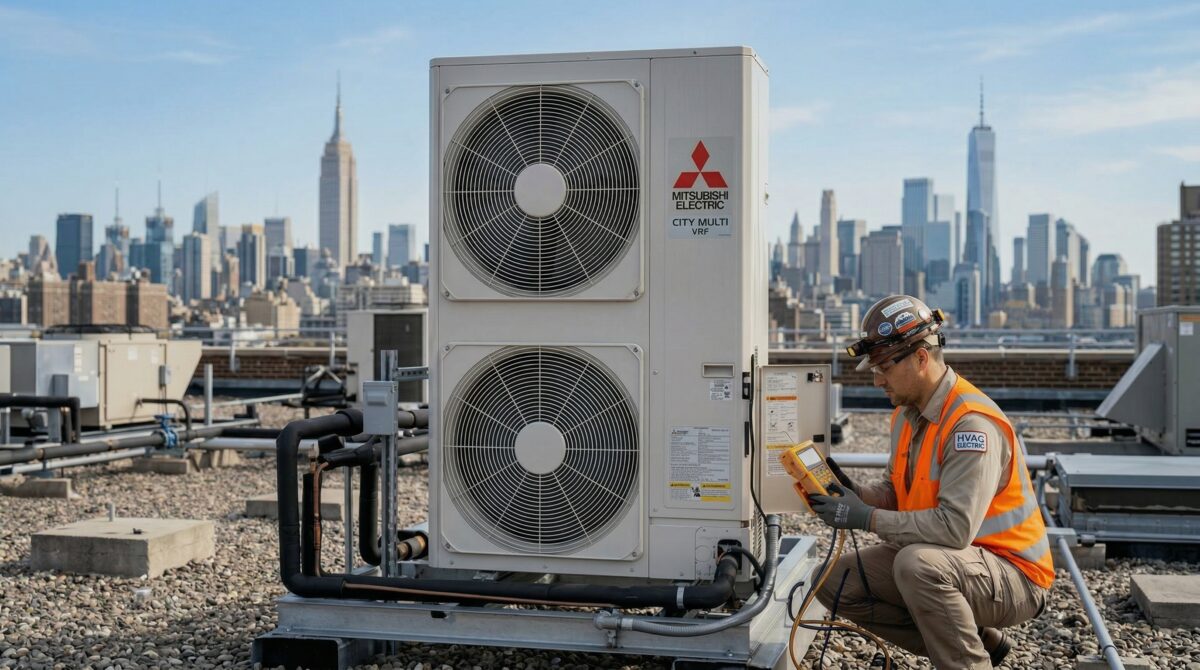
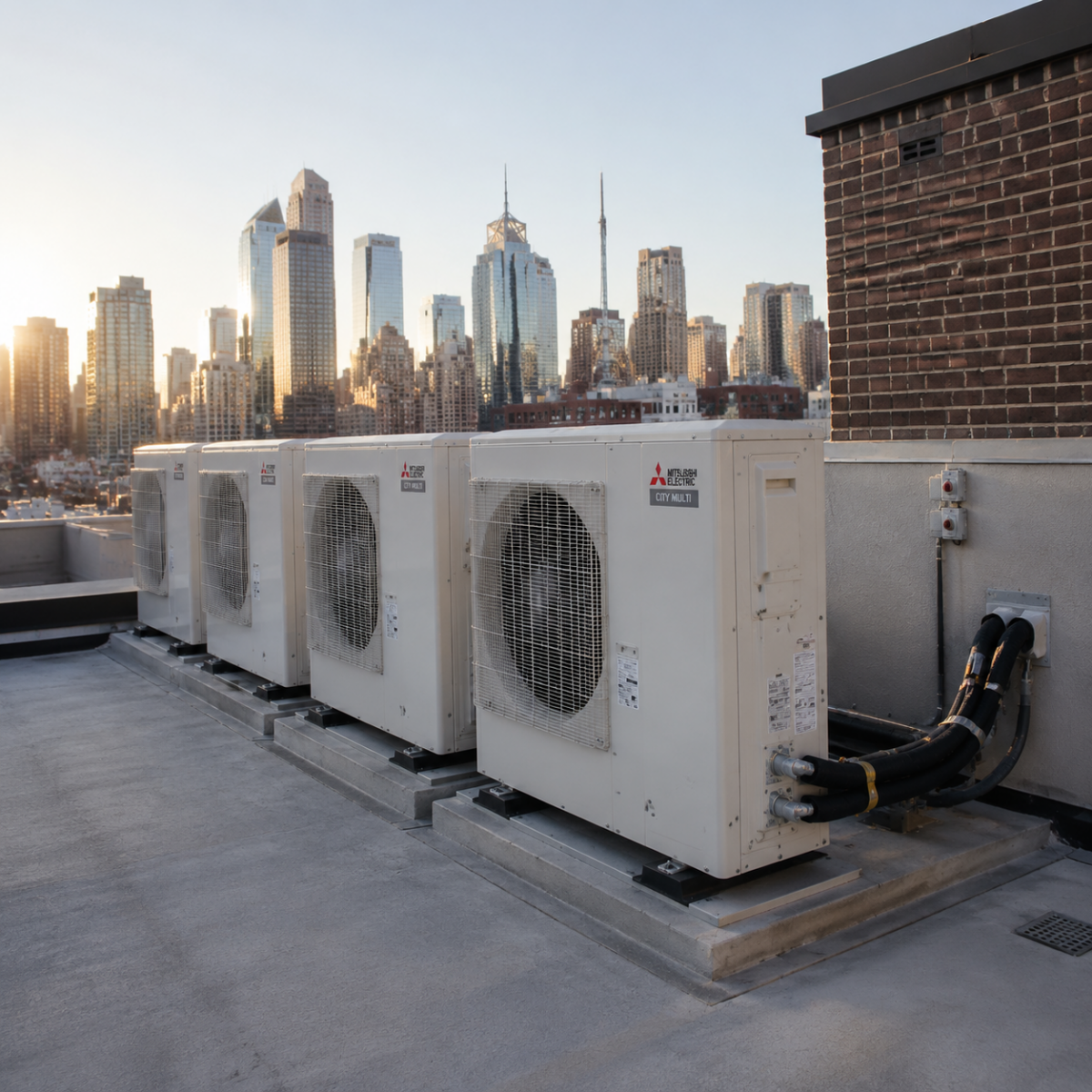
Mitsubishi City Multi systems run a large share of NYC’s commercial and multifamily VRF capacity. When one throws a fault code on the controller, the building engineer is usually the first line of defense. Knowing what the code actually means, and what it doesn’t, is the difference between a 20 minute reset and a week of guesswork while tenants call the front desk.
This is a working reference for the Mitsubishi City Multi error codes that show up most often on systems installed across Manhattan, Brooklyn, Queens, and the Bronx between 2012 and 2016. Many of those systems are now hitting their second decade, and the failure patterns are starting to cluster.
How Mitsubishi City Multi Reports Faults
City Multi displays errors as a four character code on the indoor unit remote, the centralized controller (AE-200, EW-50, or G-50), or directly on the outdoor unit board. The first character is usually a letter that indicates the general category, followed by three digits that narrow down the specific component or condition.
Codes beginning with P generally point to indoor unit issues. U codes flag outdoor unit and refrigerant circuit problems. E codes indicate communication faults between units, controllers, or the M-NET transmission line. A codes are tied to address conflicts and system configuration. Anything outside these letter groups is rare and usually means a controller firmware issue.
The Codes You Will Actually See
Below are the City Multi codes that account for the majority of service calls on aging NYC installations. These are not edge cases. If you manage a building with City Multi gear, you will see most of these at some point.
P5: Drain Pump Abnormality
Triggered when the float switch detects high water in the drain pan or the drain pump fails to clear water within the expected window. On older systems, this is almost always a clogged condensate line or a pump motor that has lost prime. Pull the pan, check for biofilm in the trap, and verify the pump is actually energizing. In NYC high rises with long horizontal condensate runs, slope is usually the root cause once mechanical components are ruled out.
P6: Freeze Protection (Cooling) or Overheat Protection (Heating)
Indoor coil temperature sensor is reading outside the safe operating range. Typical causes are dirty filters, blocked return air, low refrigerant charge, or a bad thermistor. Filter restriction is the leading cause on units serving open office plans where housekeeping has fallen off.
U2: High Discharge Temperature or Low Refrigerant
One of the most common faults on systems past year ten. The compressor is seeing discharge temperatures above the safe ceiling, usually because refrigerant charge has dropped or a metering device is restricting flow. Do not just top off the system. Find the leak, repair it, recover, evacuate, and recharge to factory weight. A U2 that keeps coming back is a sign of a flare joint that has fatigued from years of thermal cycling, which is exactly what is starting to happen across mid 2010s installs.
U6: Compressor Overcurrent or Lock
The inverter has shut down the compressor because it pulled too much current or stalled. On a 12 year old system, this is often the start of the end for that compressor. Check the inverter board, the IPM module, and compressor winding resistance before recommending replacement. If the windings are out of spec, plan the swap.
U8: Outdoor Fan Motor Abnormality
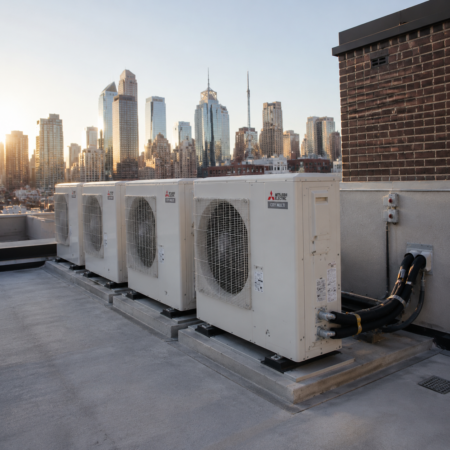
The outdoor fan is not spinning at the commanded RPM. On rooftop installations exposed to NYC winters, the bearing assemblies on first generation City Multi outdoor units are now in the failure window. Replace the fan motor with the OEM part, not a generic substitute, or the inverter board will throw the fault again within weeks.
E0 through E9: M-NET Communication Faults
This family covers transmission errors between indoor units, outdoor units, and centralized controllers. E0 is usually a remote controller communication loss. E6 through E9 typically indicate a problem on the M-NET bus itself. On older installations, the cause is often a corroded splice in a ceiling junction, a controller that has lost its address, or a transmission line that has been spliced into during an unrelated tenant fit out. Trace the bus, check terminating resistors, and verify the address scheme matches the original commissioning documentation.
A0: Communication Error Between Indoor Units
System cannot find one or more indoor units that should be on the bus. After power loss events, this is the code that wakes building engineers up. Cycle power at the outdoor unit and the controller in the correct sequence. If it persists, the issue is usually a failed indoor unit board or a broken M-NET line.
What These Codes Are Telling You About the Bigger Picture
One isolated U2 on a five year old system is a service call. The same code on a 12 year old system, repeating across multiple outdoor units in the same building, is a planning conversation. The City Multi installs that went in across NYC during the 2012 to 2016 boom are now the systems generating the bulk of repeat error codes. Compressors, fan motors, and refrigerant joints from that era are aging into their failure window at roughly the same time.
If your building is throwing the same codes month after month, the right move is not another reset. It is a documented service history, a refrigerant charge audit, and a conversation about whether you are pouring labor into a system that needs a phased replacement plan.
Getting Help on a Persistent Fault
For codes not covered above, our free VRF error code lookup covers nearly 100 City Multi codes (plus Daikin, LG, Fujitsu, and Samsung) with severity and recommended action on each.
Mountain Mechanical works on Mitsubishi City Multi systems across the five boroughs and Westchester. If you have a recurring code that nobody has been able to clear, or a system from the 2012 to 2016 install era that is starting to show its age, we can run a diagnostic visit and give you an honest read on what the system needs. Reach out through the contact page to schedule.