

Samsung DVM VRF Systems: What We’re Seeing in NYC
June 9, 2026
Your VRF System Isn’t Cooling: What to Check During Peak Summer Load
June 23, 2026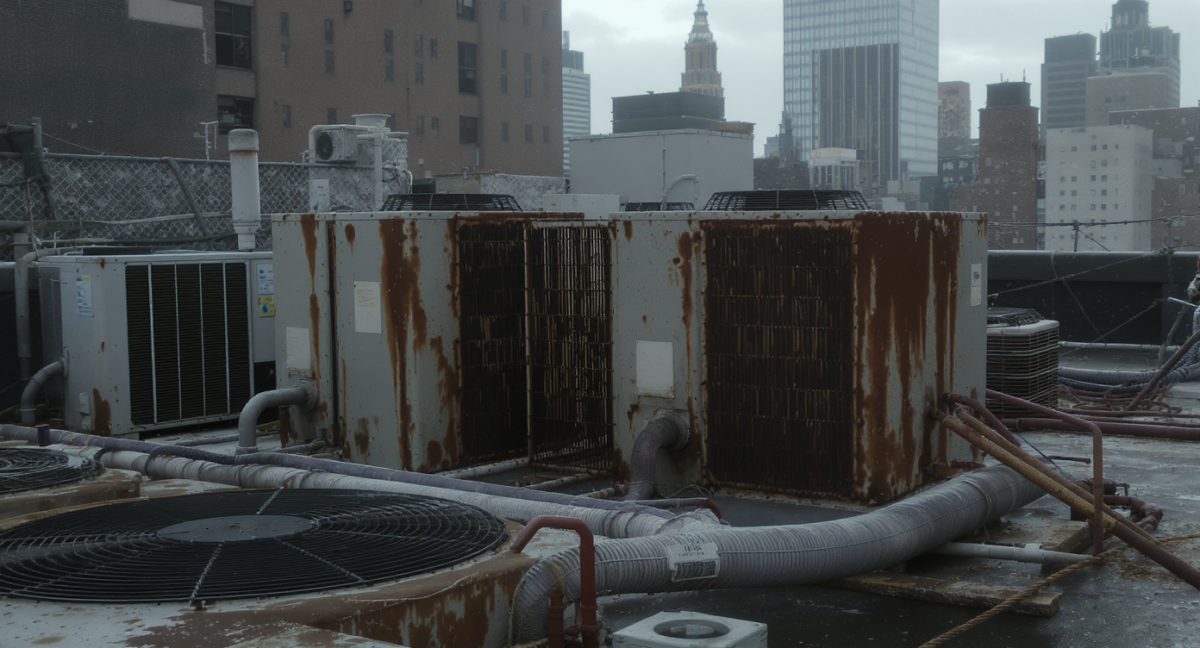
By the third service call in a single cooling season, most building managers already know the answer. They just don’t have the numbers yet to defend it to ownership or a board. A commercial HVAC system that keeps going down isn’t only a comfort problem. It’s a capital decision waiting to be made, and the math behind it is more straightforward than most people expect.
The hard part isn’t knowing that an old system is on its way out. It’s proving when repair stops being the responsible choice. Here is how we walk building owners and property managers through it.
Start with repair frequency, not the repair bill
A single expensive repair almost never justifies replacement on its own. A compressor or a control board can fail on a system that has years of life left in it. What matters is the pattern. When you are pulling a service ticket every few weeks, and the same unit shows up on the log season after season, the equipment is telling you something the invoices alone won’t.
The rule we use is simple. Track the number of separate service events over the past 18 to 24 months, not just the dollar totals. Two or three reactive calls a year on a large system is normal wear. Six or more, on the same equipment, with different failure causes each time, means the system is past the point where targeted repairs hold. You are no longer fixing a problem. You are chasing a system that is coming apart.
The age curve and the 2012-2016 install wave
Most commercial HVAC equipment in NYC is built to run 15 to 20 years with proper maintenance. Rooftop units and packaged systems tend to land on the shorter end of that, especially the ones sitting in salt air or running hard through a Midtown summer. The failure rate doesn’t climb in a straight line. It stays low for years, then bends sharply upward once a system passes the 12 to 15 year mark.
That curve matters right now because of timing. A large wave of commercial systems, including a lot of VRF, went into NYC buildings during the 2012 to 2016 construction and conversion boom. Those systems are now 10 to 14 years old and entering the steep part of the curve. If your equipment is in that range and starting to act up, you are not dealing with bad luck. You are dealing with a system reaching the age where parts get scarce and small failures cascade.
When energy and compliance tip the scale
Repair-versus-replace used to be a pure reliability question. In NYC it isn’t anymore. Local Law 97 put a carbon cap on most buildings over 25,000 square feet, and the limits get tighter in 2030. An aging, inefficient HVAC plant is often the single biggest line item driving a building over its emissions cap, which means keeping it alive can carry an annual penalty on top of the repair costs.
Energy benchmarking under LL84 makes the same point in a different way. If your Energy Star score has been sliding and your utility costs keep climbing while occupancy stays flat, the equipment is burning money every month it runs. A modern high-efficiency system, VRF included, can cut HVAC energy use meaningfully and move a building back under its LL97 threshold. When you add avoided penalties and lower utility spend to the repair savings, the replacement case often pencils out faster than owners assume.
The cost nobody puts on the invoice
Downtime doesn’t show up on a repair bill, but it is real money. A cooling failure in a Class A office tower during a July heat wave means tenant complaints, possible rent concessions, and a hit to the building’s reputation with brokers. In a luxury co-op or condo, a heating outage in January turns into board meetings and emails you don’t want to answer.
Older systems fail at the worst possible times, under peak load, when parts are hardest to source same-day. The longer you stretch a dying system, the more you are betting that it won’t quit on the hottest or coldest day of the year. That bet gets worse every season. Factor the cost of an emergency failure, including after-hours labor and tenant fallout, into the comparison. It usually pushes a borderline system toward replacement.
Building the capital case for replacement
When you take this to ownership or a board, frame it as a financial decision, not a maintenance request. Pull together the repair history with dated service events, the trailing energy spend, any LL97 exposure, and a realistic replacement estimate that accounts for NYC-specific costs like crane and rigging for rooftop equipment, after-hours work, and freight elevator scheduling.
A useful threshold for commercial work is the cumulative cost test. When your repair spending over a rolling few years starts approaching half the cost of replacement, and the system is past the midpoint of its service life, replacement is almost always the better long-term move. Add compliance pressure and downtime risk, and the case gets stronger. The goal isn’t to replace early. It’s to stop pouring capital into equipment that won’t return it.
Every building is different, and the right answer depends on the specific equipment, the building type, and where you sit on LL97. We have been making this call on NYC commercial systems for over 35 years, across high-rises, mixed-use, and luxury residential. If you are staring at a service log and trying to decide whether to keep fixing or finally replace, give us a call at 833-504-HVAC. We will give you a straight answer based on the numbers, not a sales pitch.